At a glance:
- Local anaesthetic, home the same day
- About an hour in the clinic
- For early jowls and a softening jawline
- Back to work in 3 to 4 days
- Results last up to 2 years
You know the move. You’re standing at the bathroom mirror, and you put your fingertips under your jaw and push gently upwards. For a second, there it is. The jawline you had a few years ago, the face that doesn’t look tired by four in the afternoon. Then you let go, and the jowls drop back into place.
Nearly every patient who comes to see me about a mini facelift in Dublin has done that at some point. Some admit they do it in the rear-view mirror at red lights. And the question they bring me is always the same: can you make it stay there, without invasive surgery?
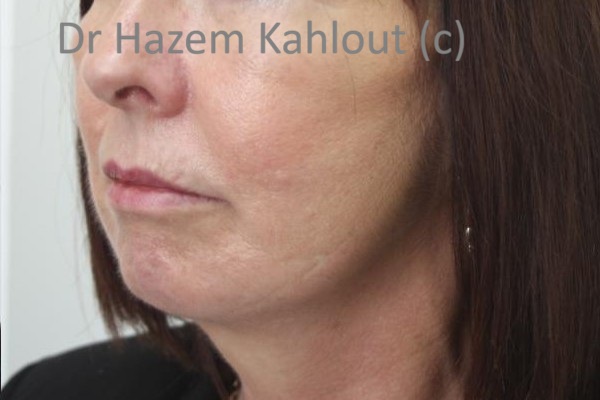
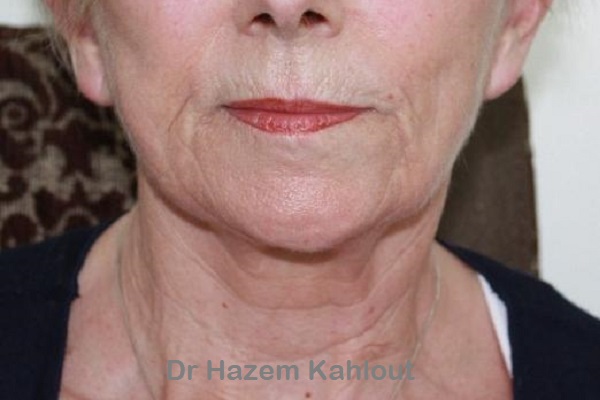
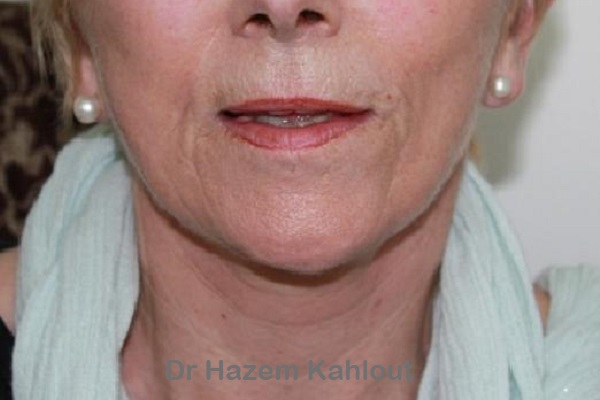
For the right face, yes. Our MiniLift lifts early jowls with semi-permanent sutures under local anaesthetic. No skin is cut away, and most people are back at work in 3 to 4 days. I’ve practised aesthetic medicine since 1998, and this is still one of the procedures I enjoy most, because you can see the change before you leave the room.
But it isn’t for everyone. So I’ll be straight with you here about what it is, how it works, who it suits and how long it lasts. I’ll also tell you when I’d point you towards something else instead.
What a mini facelift is (and what it isn’t)
Let’s clear up the name first, because it trips a lot of people up. “Mini facelift” means different things depending on whose website you’re reading. At some clinics it’s a short-scar facelift. That’s an operation under general anaesthetic, where skin is cut away in front of the ear and stitched closed.
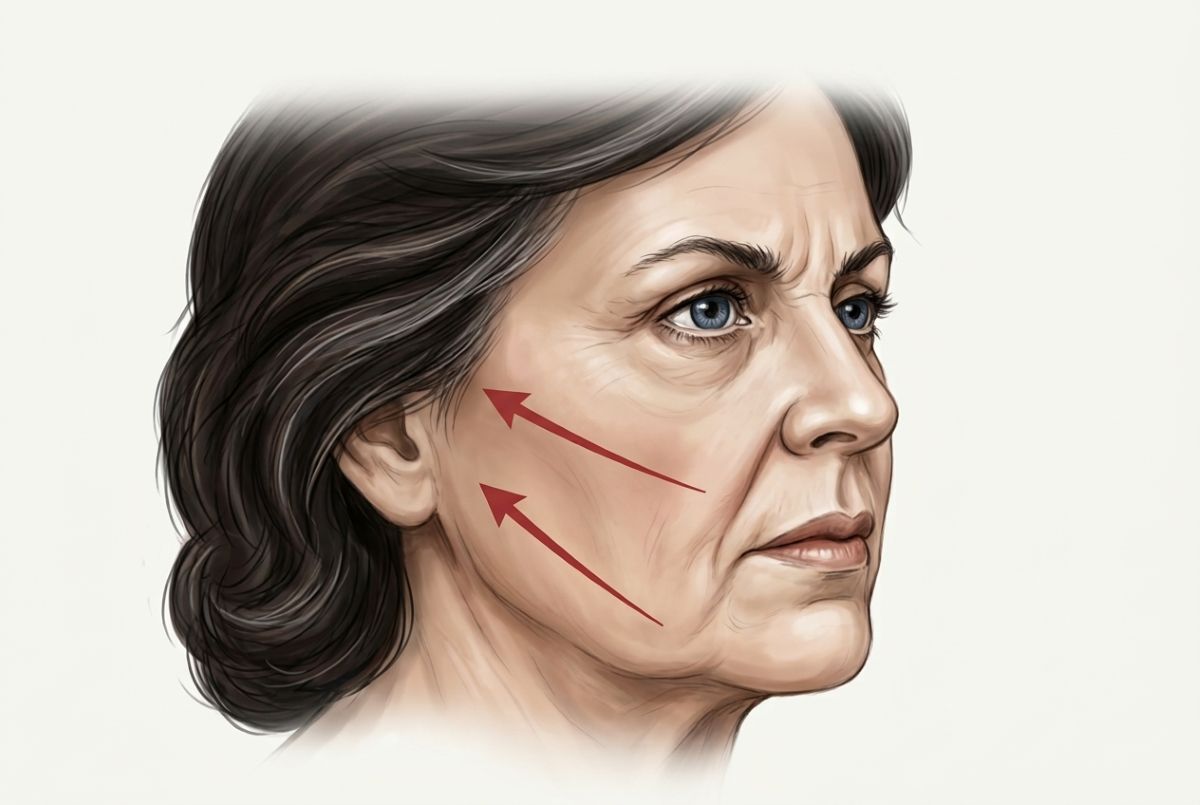
That’s not what I do. The MiniLift is a fixed suspension suture lift. I do it under local anaesthetic here in the clinic in Castleknock, and I don’t remove any skin. Instead, semi-permanent dissolvable lifting sutures reposition the sagging tissue of the lower face from underneath.
It works on the jowls along the jaw and the lower cheeks. It also softens the early lines that start running down from the corners of the mouth.
So it sits somewhere between injectables and surgery. You get a firmer, more definite lift than fillers or anti-wrinkle injections can give. But you skip the scars, the general anaesthetic and the weeks at home that come with a full facelift.
If you came here expecting surgery, that might be a nice surprise. And if your concerns turn out to be further along than a MiniLift can handle, I’ll tell you that at the consultation too.
How a scarless mini facelift works
How do you lift a face without cutting skin? It comes down to where the sutures are placed, and what your body does with them over the months that follow. There are three steps.
Step 1: Marking and numbing
First, I mark the lines of lift on your face while you’re sitting up. Sitting matters, because that’s when gravity shows me exactly how your tissue has dropped and which way it needs to go back. Then I numb the area with local anaesthetic. You’re awake the whole time, you can chat away if you like, and you go home the same day. If you’re the nervous type, I’ll give you a slight sedative to relax you.
Step 2: Placing the lifting sutures
Next, I make tiny entry points, about 2mm wide, high above the hairline. Through these I place several dissolvable polydioxanone sutures on each side of the face. Each one is guided through the deeper tissue layer along the line I marked.
The entry points are so small that they don’t need stitches to close. That’s why I’m comfortable calling it a scarless mini facelift. No skin is removed, nothing is stitched shut, and there’s nothing to see once it heals.
Step 3: The lift
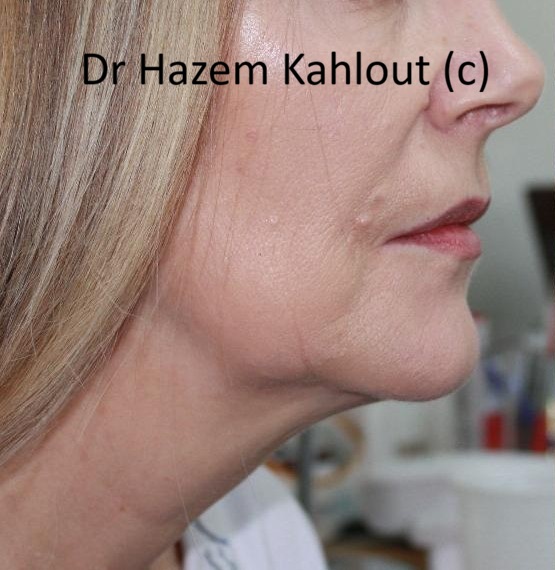
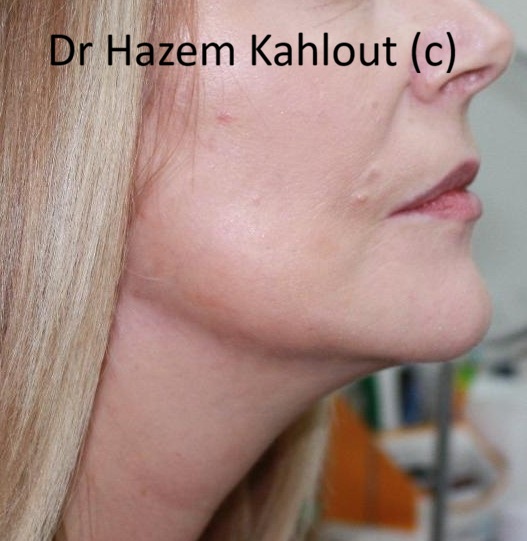
Then the sutures gently pull the jowls and lower cheeks back up into place. Most patients can see the difference in the hand mirror before they leave. The whole thing takes about an hour.
Why the lift lasts longer than the sutures
This is the part I like explaining most. Polydioxanone has been used in surgery for decades. Once it’s in, polydioxanone sutures dissolve gradually over about 4 to 6 months. While they dissolve, your body builds new collagen around each one. In fact, a tissue study in the Journal of Cosmetic Dermatology tracked this collagen forming around the sutures in the months after they were placed.
So by the time the sutures are gone, your own collagen has taken over the job of holding things up. That’s why the result carries on well past the point where the sutures have dissolved.
Who a mini facelift suits
The patients who do best with a MiniLift tend to have a few things in common. The jowling is early to moderate. The skin still has good elasticity, so it moves well when it’s lifted. There’s little or no fat under the chin. And they want to look rested and like themselves, not like someone else.
Usually that’s women and men in their 40s and 50s. But age on its own doesn’t decide it. I’ve seen a 58-year-old with lovely skin quality get a great result, and a 45-year-old with a lot of laxity who would have been disappointed. That’s why I look at your skin, your jawline and your neck at every consultation before I recommend anything.
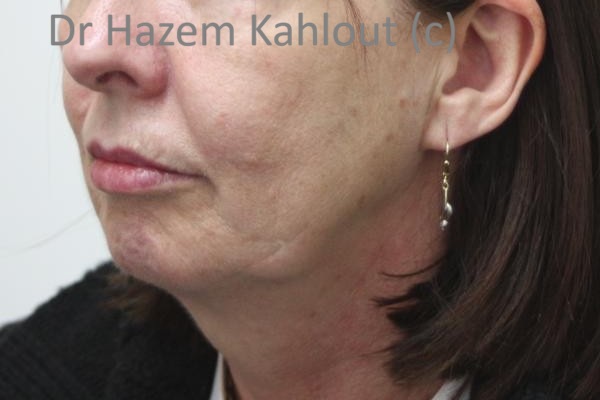
There are a few situations where I’ll steer you elsewhere. If there’s fat or loose skin under the chin and down the neck, sutures alone won’t sort that out. Our J-Plasty facelift combines VASER, Renuvion and the MiniLift sutures, so it can sculpt and tighten the neck as well. If it’s only fat, double chin liposuction may be all you need.
If the cheeks have lost a lot of volume, a lift can’t put it back. Here, SoftLift volume restoration is often the better place to start. And if the face and neck have dropped quite a bit, I’ll refer you to a surgical colleague for a formal facelift, because that’s what will get you the result you’re after.
Mini facelift recovery time: what the first week looks like
For a lot of people, recovery is what decides it. The good news is that mini facelift recovery time is short.
On the day itself, you go home with no drains and no bandages. Your face will feel tight, and a bit of swelling is normal. You’ll probably notice some puckering around the entry points too. That comes from the local anaesthetic and settles within a few days, so don’t let it worry you.
Over days two and three, the swelling usually peaks and then starts to go down. Bruising, if you get any, is generally mild. Sleep propped up at about 30 degrees for those first few nights, because it really does help the swelling settle faster.
From around day four, most people are back at work. The tightness eases, and the lift looks a little more natural every day.
For the first few weeks, avoid anything that drags the skin of your face downwards. The two that catch people out are sleeping face-down and rubbing downwards when you’re cleansing or putting on make-up. Pat gently, or work in upward strokes instead.
There are no skin stitches to take out. Even so, I see everyone at 1 week and again at 6 weeks. That way I can check healing is on track and answer whatever questions have come up since.
To put that in context, recovery from a surgical facelift takes about 2 to 4 weeks, and the final result can take 6 to 9 months to show.
How long does a mini facelift last?
It’s the question I’m asked most, and it deserves a straight answer. A MiniLift typically lasts up to 2 years.
No lift stops your face from ageing. Think of it as turning the clock back a little rather than stopping it. And even as the effect softens, most patients still look fresher than they would have if they’d done nothing.
After that, people usually go one of three ways. Many simply have the MiniLift again to refresh it. If the neck has started to loosen by then, the J-Plasty is often the better next step. And if things have moved on further, a surgical facelift will give a longer-lasting result.
To be honest, a surgical facelift does last longer, and figures of 7 to 10 years are often quoted. But it comes with a general anaesthetic, incisions around the ears and several weeks of recovery. The MiniLift trades some of that longevity for a much lighter procedure and a far quicker return to normal life. For a lot of my patients, that’s exactly the trade they want.
Mini facelift vs full facelift (and where J-Plasty fits)
It’s much easier to choose when you can see the options side by side.
| MiniLift | J-Plasty | Surgical facelift | |
|---|---|---|---|
| Anaesthetic | Local | Local | General |
| Where | Clinic, home same day | Clinic, home same day | Hospital, often overnight |
| Skin removed | None | None | Yes |
| Scars | 2mm entry points in the hairline | Tiny entry points | Incisions around the ears |
| Back to work | 3 to 4 days | 5 to 7 days | 2 to 4 weeks |
| Treats the neck | No | Yes | Yes |
| Best suited to | Early jowls, good skin | Jowls plus neck fat or loose skin | Advanced sagging |
Mini facelift vs thread lift
People often ask me how this differs from a thread lift. Many thread lifts use short barbed threads placed just under the skin. The MiniLift uses longer lifting sutures placed in the deeper tissue, along lines I’ve planned for your face specifically. In my experience, that gives a firmer, more defined lift along the jawline.
When J-Plasty is the better choice
If your neck bothers you as much as your jowls, have a look at the J-Plasty facelift. It uses the same MiniLift sutures, but adds VASER to sculpt away fat and Renuvion skin tightening to firm the skin. That way the jawline and neck are treated together.
Your mini facelift consultation in Dublin
Every mini facelift I do in Dublin starts with a consultation, and that consultation is with me. We look at your jawline, your skin and your neck together, and you tell me what’s bothering you. Then I’ll tell you honestly whether the MiniLift is the right fit, or whether something else would serve you better.
You can come in to the clinic in Castleknock, Dublin 15. Or we can meet by Zoom or Teams if you’re outside Dublin or your diary’s packed. Either way, the consultation fee comes off your treatment if you decide to go ahead. You can also spread the cost with Humm finance.
If you’d like to know a bit more about me, my training and my memberships, you’ll find it all on my profile page.
Mini facelift FAQs
Is a mini facelift permanent?
No. A MiniLift usually lasts up to 2 years, because your face keeps ageing naturally. It can be repeated safely, and plenty of my patients choose to refresh it rather than move on to surgery.
Does a mini facelift leave scars?
The entry points are about 2mm wide and sit high in the hairline. No skin is removed and nothing needs stitching closed, so in the vast majority of patients they heal without a visible scar.
Is a mini facelift painful?
It’s done under local anaesthetic, so you’ll feel pressure rather than pain. Afterwards there’s some tightness and mild soreness for a few days, and simple painkillers are usually enough.
Can a mini facelift fix my neck?
No. The MiniLift works on the jowls and lower face. If you have fat or loose skin under the chin, the J-Plasty treats the jawline and neck together and is likely to suit you better.
What’s the best age for a mini facelift?
Most of my MiniLift patients are in their 40s and 50s. But skin quality matters more than the number on your birth certificate. Good elasticity and early jowls are the combination I look for.
Can I combine a mini facelift with other treatments?
Yes. The MiniLift lifts, but it doesn’t add volume. So if the cheeks are hollow or the folds are deep, I often pair it with SoftLift or dermal fillers for a more balanced result.
Can I have a consultation without coming in?
Yes. I do video consultations by Zoom or Teams, which suit people outside Dublin or with a busy week. The fee comes off your treatment if you go ahead.
Is a mini facelift in Dublin right for you?
If you’ve got early jowls, good skin and no appetite for weeks of downtime, a mini facelift in Dublin is well worth a conversation. Book a consultation, in the clinic or online, and we’ll look at it together. And if it turns out something else would suit you better, I’ll tell you that too.
Related Treatments
Facial Volume Restoration SoftLift


