Let me start with something very straightforward: you are not alone, and there is absolutely nothing wrong with you.
If you have noticed small white or flesh-coloured bumps arranged in neat rows around the rim of your penis, there is a very good chance you are dealing with a condition called Pearly Penile Papules or PPP for short. In over 30 years of men’s health and cosmetic medicine here in Dublin, PPP is one of the most common concerns I see. And yet it is also one of the least talked about. That silence can cost men years of unnecessary anxiety, shame, and avoidance of intimacy. So today, let us talk about it clearly, honestly, and without embarrassment.
What Are Pearly Penile Papules?
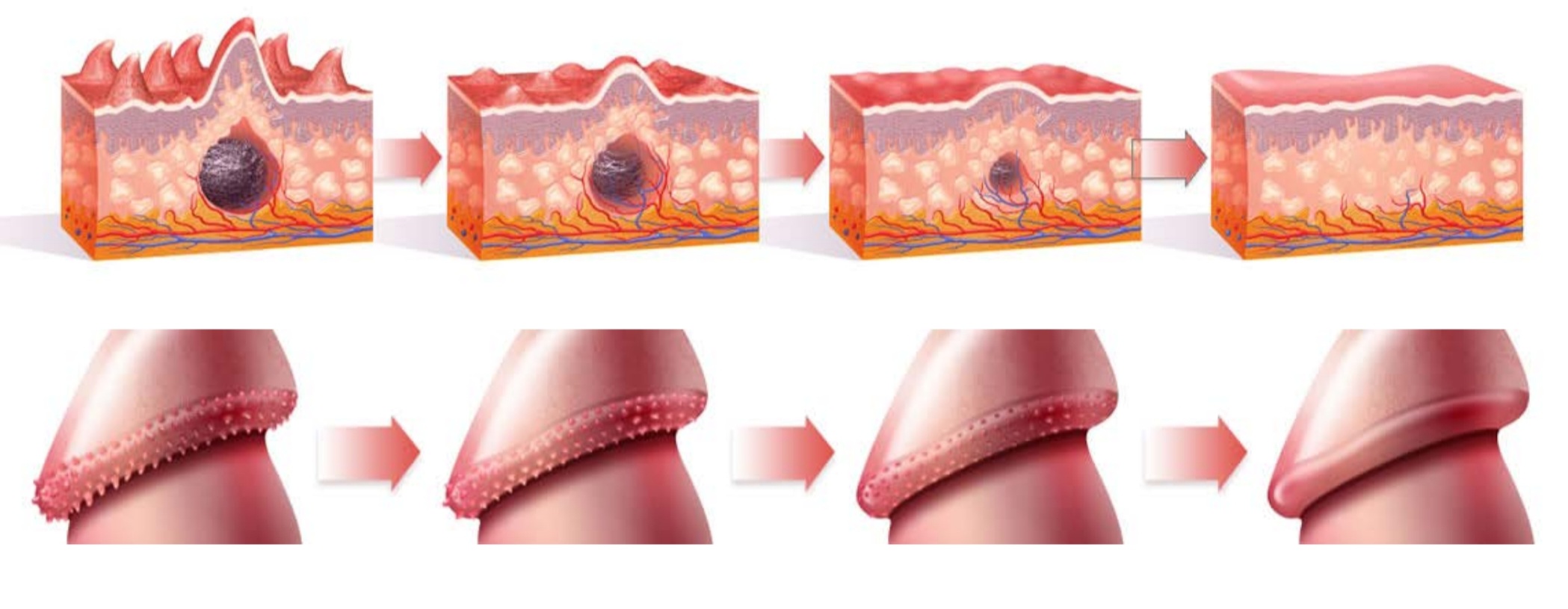
Pearly Penile Papules are tiny dome-shaped bumps that appear in one or two neat rows around the corona — the ridge where the head of the penis meets the shaft. They can be white, yellowish, or skin-coloured, ranging between 0.5 and 4 millimetres in size. Medically, they are classified as a type of angiofibroma which is a completely benign overgrowth of normal skin tissue.
PPP are not an infection. They are not genital warts. Pearly penile papules have nothing to do with sexual activity or hygiene. They are simply a normal anatomical variation let’s say like a freckle or a birthmark that a significant number of men are born with or develop around puberty.
How common are they? In a large prospective study of over 2,600 men at a dermatology clinic, the prevalence was found to be approximately 17%, while a frequently-cited 1999 study recorded as high as 48% in men specifically attending a genitourinary medicine clinic. The real-world figure for the general population sits somewhere around one in five to one in four men, with rates higher in uncircumcised men. They tend to appear in early adulthood and, unfortunately, they do not go away on their own, though they may become slightly less noticeable with age.
Why Do Men Choose to Have PPP Removed?
The medical answer is simple: they do not need to. PPP cause no physical harm whatsoever. But medicine is not only about the physical. In my experience, the psychological impact of PPP can be profound and lasting.
Many of the men I see in Dublin have been carrying this as a private secret for years, sometimes decades. Some have avoided intimate relationships entirely. Others have ended encounters prematurely or felt too self-conscious to allow a partner close. Research published in the International Journal of STD & AIDS found that over a third of men with PPP had previously been concerned or worried by their presence, and approximately a quarter had experienced embarrassment.
A large part of the distress stems from mistaken identity. Because PPP can look similar to genital warts at a glance, partners sometimes react with alarm. That single moment of misunderstanding can do lasting damage to confidence and trust. Unlike genital warts which are caused by the human papillomavirus (HPV) and are sexually transmitted, pearly penile papules have no viral cause, no infectious component, and cannot be passed to a partner under any circumstances.
For the men who choose removal, the motivation is almost never vanity but rather freedom. Freedom from anxiety, from avoidance, and from a condition that has quietly controlled too much of their lives.
Who Is a Good Candidate?
The best candidates for PPP removal are men in good general health who experience genuine psychological distress from their condition. That distress does not have to be dramatic to be valid because even a persistent low-level anxiety is a perfectly good reason to explore your options.
Before any procedure, I carry out a thorough consultation to confirm the diagnosis and rule out other conditions such as genital warts or molluscum contagiosum, which require very different management. We then discuss treatment options and aftercare in full.
Please do not attempt to treat PPP yourself. Picking, squeezing, or cutting papules does not work and can lead to inflammation, bleeding, infection, and scarring that is far more difficult to address than the original condition. Similarly, internet home remedies like castor oil, alpha hydroxy acid peels, over-the-counter wart removers are ineffective and some, particularly caustic agents, can cause serious chemical burns to the very sensitive skin of the head of the penis.
How Is PPP Removed? Understanding the Three Technologies
At Castleknock Cosmetic Clinic we offer three clinically proven approaches to PPP removal. All three are performed under penis block local anaesthesia, so the area is completely numb before we begin. The procedure is pain-free and typically takes around an hour.
1. Short Wave Diathermy (SWD)
Short wave diathermy uses a high-precision device to deposit measured amounts of electromagnetic energy directly into each papule, destroying it through controlled heat. It is a well-established technique that reliably clears PPP. However, because SWD works through thermal energy that distributes slightly more broadly than plasma, it carries a marginally greater risk of affecting surrounding tissue and tends to involve a somewhat longer recovery period.
2. Carbon Dioxide (CO2) Laser
CO2 laser is the most extensively studied PPP removal method in the published literature, appearing in the majority of peer-reviewed case studies reviewed in a 2025 systematic review published in the Journal of Clinical and Aesthetic Dermatology. It uses an infrared beam to precisely vaporise each papule, and in skilled hands delivers excellent clearance. Studies report skin healing within approximately one week, with consistently high patient satisfaction. CO2 laser carries a slightly higher risk of hyperpigmentation than plasma — particularly in men with darker skin tones — and who occasionally require more than one session. It remains a very strong option where plasma is not selected.
3. Plasma Fibroblasting
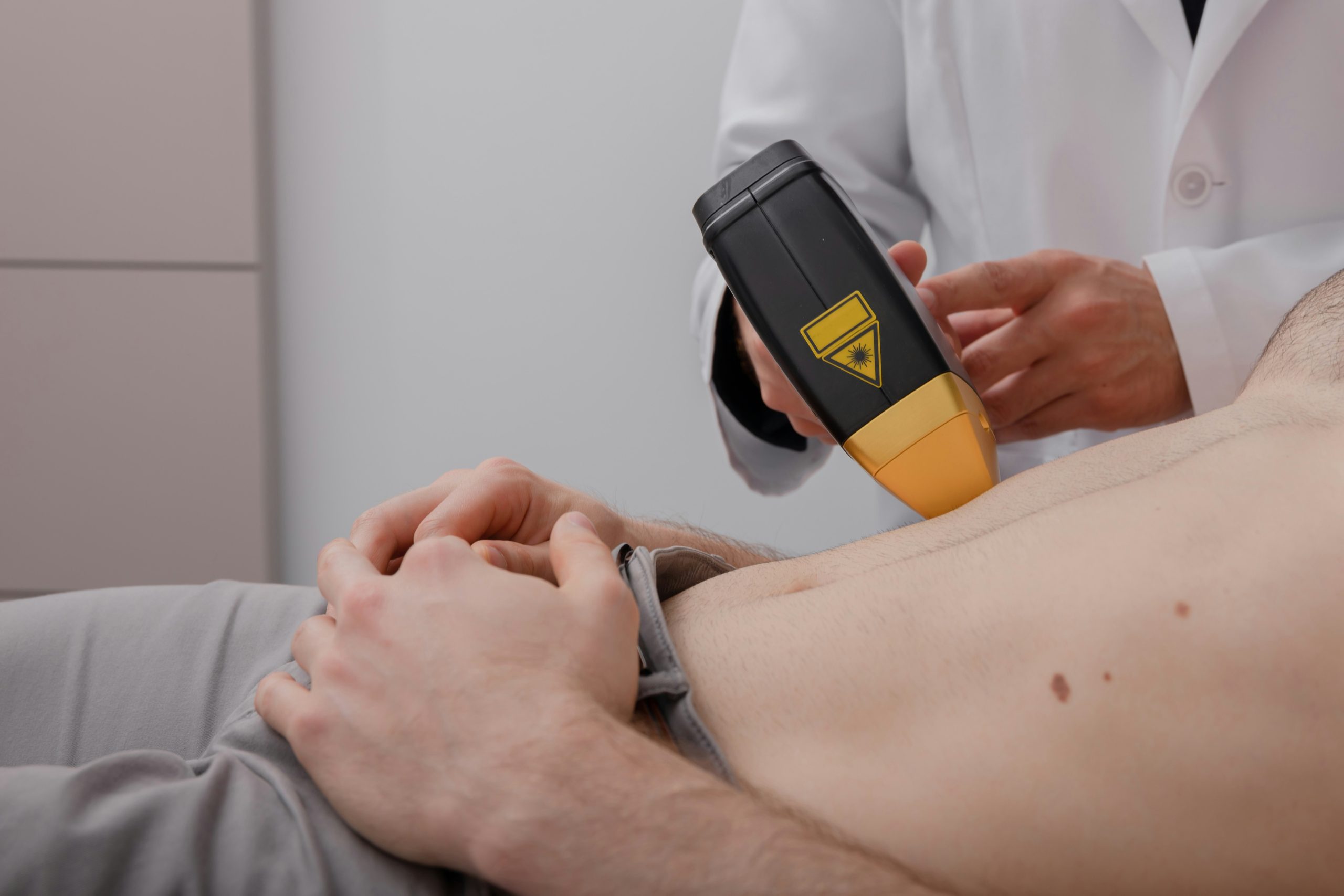
Plasma fibroblasting, also known as helium plasma therapy. A fine, pen-like device ionises gas, in our case helium to create a highly controlled stream of plasma energy. When directed precisely onto a papule, it causes the tissue to sublimate (to convert directly from solid to vapour) without burning, without cutting, and without generating the kind of heat that spreads to surrounding healthy skin. Think of it like a precision eraser where it removes exactly what needs to go, and nothing else.
What makes plasma stand apart comes down to four key advantages:
- Precision without thermal spread. Unlike laser or short-wave diathermy, which use heat as their primary mechanism, cold plasma’s non-thermal action keeps energy exactly where it is directed which in my opinion is essential on the sensitive skin of the glans.
- Lower risk of scarring and pigmentation change. Because there is no burning or cutting, the risk of visible scarring or changes in skin colour which is a known concern with CO2 laser, particularly in men with darker skin tones is significantly reduced.
- Faster healing. Less disruption to surrounding tissue means the skin’s repair process begins sooner and heals more cleanly. Studies on helium plasma dermal resurfacing have reported 95% patient satisfaction and a low adverse event profile.
- Built-in antimicrobial action. Cold plasma naturally produces reactive oxygen and nitrogen species that disrupt the membranes of bacteria, viruses, and fungi — offering a degree of infection protection at the treatment site that laser and SWD do not provide.
What Is the Success Rate?
Across all three methods, when performed by an experienced clinician, we see a clearance confidence rate of between 60-90%. For most patients, a one or two sessions is all that is needed. Men arrive weighed down by something they have hidden for years, and they leave knowing it is gone for good.
Recovery and Aftercare: This Part Is Just As Important
The procedure removes the papules. Aftercare determines the quality of your result. Please take this section seriously.
After treatment, the skin will go through a natural healing response including some redness, mild swelling, and light surface crusting is completely normal in the first few days. Your body is simply doing its job. To support a clean, full recovery:
- Keep the area clean and dry as I will advise at your appointment.
- No strenuous exercise for the first week to ten days. Sweating and movement in the area can irritate healing skin.
- No sexual activity for four weeks minimum. Friction on healing tissue is the single biggest risk to your outcome. It can disrupt the healing process, introduce infection, and compromise the aesthetic outcome.
- No creams, lotions, or home remedies on the treated area unless specifically prescribed.
The good news is that plasma-treated skin generally heals faster than with other methods. Most of my patients are fully recovered and back to their full intimate lives within a month or two. A small price for a permanent result.
Come and See Us in Dublin — in Complete Confidence
If you have been living with PPP as a private burden, I want you to know that Castleknock Cosmetic Clinic is a completely discreet, non-judgemental space. Whether you are 19 or 59, whether this has been on your mind for six months or twenty years you deserve to feel at ease in your own skin.
What do you think? Did you find this blog helpful? Why not join me for meaningful and educational social media posts on Instagram I’d love to hear your comments comments@castleknockcosmetics.ie or tweet me @dr_h_kahlout. If you found this blog helpful I’d appreciate a positive review on Google Review and our Facebook page.