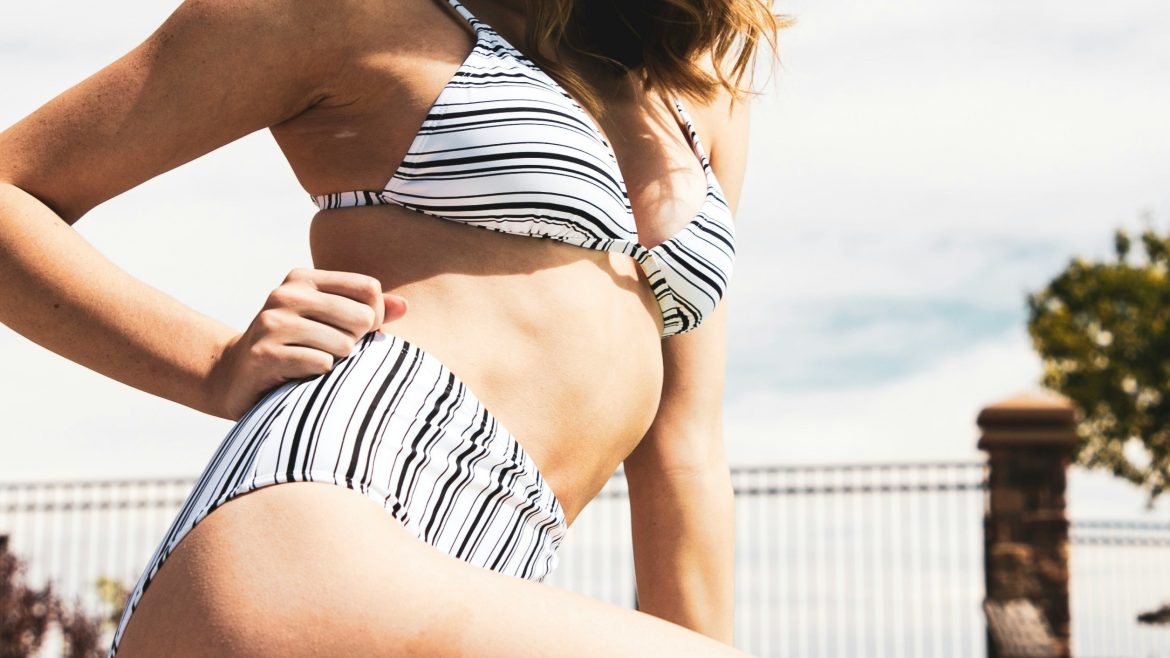
You’ve done everything right. You saved for your tummy tuck, took the time off work and got through those first difficult weeks of recovery. Your lower tummy is finally flat. Then you catch your side profile in the mirror and notice something isn’t quite right. A rounded upper belly fullness sitting above your belly button. Flat at the bottom, yet round on top.
And honestly? That moment can feel like a real kick in the teeth.
If it’s happening to you, you’re far from alone. An upper belly bulge after tummy tuck is one of the most common things women bring to me in clinic. Lots of them had their surgery somewhere else, here in Ireland or abroad, and most arrive with the same quiet worry: did something go wrong?
Usually, it didn’t. So let’s talk it through properly. I’ll explain why the upper tummy can look fuller after abdominoplasty, how to tell swelling from fat from muscle, how long you really need to wait, and what we can do if it doesn’t settle. And if you’re noticing other changes too, like dog ears or a puffy mons, have a look at our overview of the three most common tummy tuck concerns first.
Why Your Upper Belly Can Look Fuller After a Tummy Tuck
What a standard tummy tuck actually removes
Here’s something most people aren’t told clearly enough. A full tummy tuck mainly takes skin and fat from below the belly button. To close the wound, your surgeon then draws the upper skin down towards the scar, a bit like pulling a blind down to the windowsill.
So the lower tummy ends up much thinner. But the upper part keeps most of the fat it always had. Two different thicknesses of tissue now sit right beside each other, and once the bottom half is flat, the top half looks fuller than ever. It’s a contrast thing, really. The upper belly didn’t grow. Everything below it shrank.
The safety trade-off your surgeon made
You might be wondering why your surgeon didn’t just take more fat from up there at the same time. Fair question. The answer is preserving your upper abdomen blood supply.
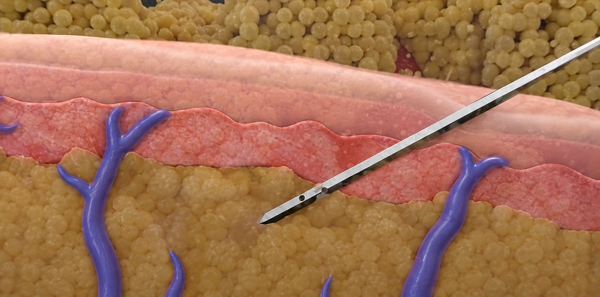
The skin of that upper flap is kept alive by tiny vessels called perforators. There are upper and lower abdomen vessels. During a tummy tuck, the lower perforators are removed leaving the upper ones carrying the burden alone. We have to preserve them. If we go in too hard with liposuction during a tummy tuck, we risk damaging them, which can lead to poor healing or, at worst, skin breaking down. That’s not a risk any careful surgeon takes lightly.
Surgeons have wrestled with this for decades. Combining liposuction with a tummy tuck has historically been approached cautiously because of the risk to the skin, yet leaving fat in the middle and upper abdomen tends to give a disappointing shape. Some techniques try to have it both ways. Lipo-abdominoplasty, for example, keeps the upper undermining to a narrow strip between the stomach muscles, which preserves roughly 80 percent of those perforating vessels.
So look, a fuller upper belly is often the price of a safer operation. Think of it as a safety trade-off. Not a failure. It can always be corrected later, but skin necrosis and wound not healing is not really reversable.
Upper Abdomen Swelling or Fat After Tummy Tuck? The Usual Causes
Not every upper belly bulge after tummy tuck has the same cause, and that matters, because the fix depends completely on what’s going on underneath. Some causes fade on their own. Some respond beautifully to liposuction. And some need a different route altogether.
Swelling
In the first few months, swelling is the usual suspect. During surgery, the tiny lymphatic channels that drain fluid from your tissues get cut, and until they grow back, fluid hangs around. The NHS guidance on tummy tuck recovery even lists temporary swelling above the scar as a common side effect. Swelling tends to feel firm, it’s worse by evening, and it slowly improves week by week.
Residual fat under the skin
This is the fat that was deliberately left in the upper flap. It feels different. Soft, pinchable, the same in the morning as it is at night. And it doesn’t budge with time. The good news? It’s the one cause liposuction can genuinely fix.
A muscle repair that has loosened
In most tummy tucks, the surgeon stitches your stomach muscles back together to close the gap left by pregnancy (rectus diastasis). Now and again, that repair loosens, or it simply wasn’t carried high enough above the navel.
I don’t want to frighten anyone here, because it’s uncommon. One 2025 randomised trial found the gap came back in about 5 percent of women a year after the repair, whether or not mesh was used. A wider review of repair techniques found recurrence was generally very low, with many studies reporting none at all. If you want the detail, here’s some research on diastasis repair outcomes. Still, if your shape changed suddenly, or you felt something give, get it checked.
Visceral fat
This one catches people out. Visceral fat sits behind the muscle wall, wrapped around your organs, so neither a tummy tuck nor liposuction can touch it. And here’s the frustrating bit: weight gained after surgery often heads straight there, pushing your newly tightened wall forward from behind. Cleveland Clinic has a clear explainer on what visceral fat is and how to reduce it.
Fluid, scar tissue and the shape you were born with
Less often, a pocket of fluid (a seroma), firm internal scar tissue (fibrosis) or a hernia is behind it. And sometimes it’s simply your frame. If your breastbone naturally sits further forward than your pubic bone, the upper belly can look fuller even after a lovely repair.
I’ll be straight with you. If the cause is visceral fat, a muscle problem or a hernia, liposuction isn’t the answer. In those cases, I refer patients on to the right specialist.
How Long Should You Wait Before Judging Your Upper Belly?
Patience is hard when you’ve waited so long for this result. I get it. But early swelling is a brilliant mimic, and it can look exactly like a permanent bulge.
For the first three months, swelling is expected, so try not to pass judgement yet. Between three and six months, things become clearer as the fluid drains away. By six months, most of it has usually gone.
In my experience, if an upper belly bulge after tummy tuck hasn’t changed by six months, it’s usually leftover fat, and it’s unlikely to settle on its own. Even so, I always examine before drawing conclusions.
Funnily enough, the upper tummy usually settles faster than the pubic area. The mons is the lowest point, so gravity drags fluid down there, which is why mons pubis swelling after tummy tuck can hang on much longer.
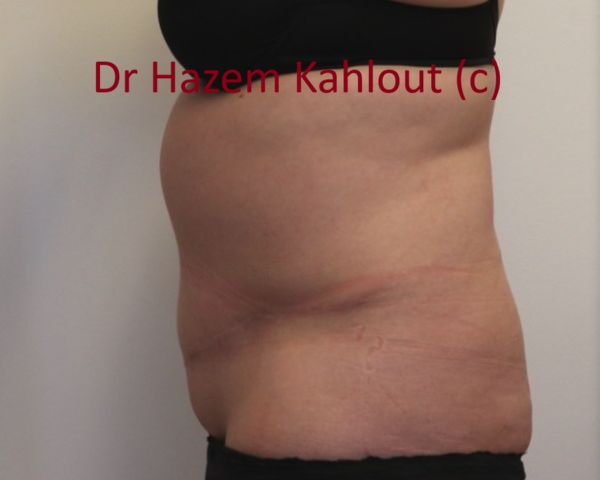
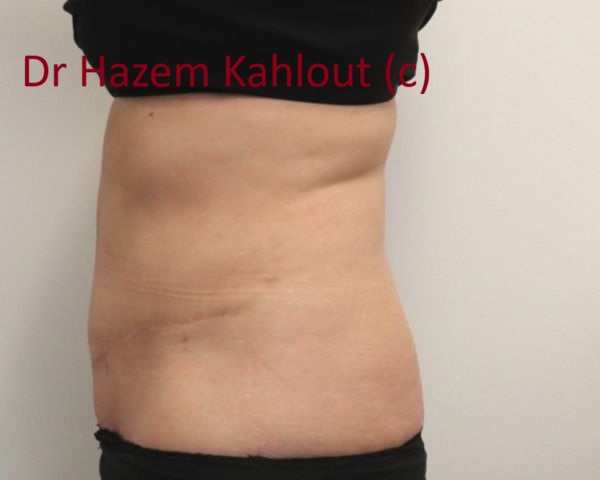
One small tip. It’s so tempting to photograph your tummy every single morning… but week-to-week photos mostly just track swelling. One side-view photo a month tells you far more.
How Doctors Tell Swelling, Fat and Muscle Apart
Forums and filtered photos can’t tell you what’s under your skin. Hands can.
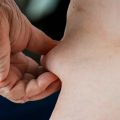
When you come in, I’ll start by gently pinching the area. Soft tissue that I can lift suggests fat. Tight, firm fullness that won’t pinch points somewhere else. Next, I compare how your tummy looks standing up and lying flat. Then I’ll ask you to cough, or lift your head off the pillow, while I feel along the midline. A bulge that pushes out under that pressure can mean a muscle or hernia issue. We’ll also chat about your weight before surgery, after it and now, because weight gained since surgery often lands as visceral fat.
If I suspect a problem with the muscle repair or a hernia, I refer for a CT scan, which shows the repair and the abdominal wall clearly.
Think about it this way. Picture two women, both seven months after surgery. The first has a soft roll above her navel that she can grab between her fingers. She’s very likely a good candidate for liposuction. The second has a tight, drum-like upper tummy that pushes out when she coughs. She needs a scan, not lipo.
And please, don’t sit on it if you notice sudden swelling, a “pop”, bulging on one side only, pain that’s getting worse, redness, fever, or a feeling of fluid moving under the skin. Get seen promptly.
Liposuction of Upper Abdomen After Tummy Tuck: When It’s the Right Fix
When the examination confirms leftover fat, liposuction of upper abdomen after tummy tuck is often the finishing touch the first surgery couldn’t safely give you. A review of lipoabdominoplasty points to a series of 300 cases showing that liposuction alongside a tummy tuck is safe if perforator vessels are preserved. Doing it at a separate stage, once everything has healed, lets us treat the upper tummy with even more success.
Why VASER suits a tummy that’s already had surgery
After a tummy tuck, the tissue is denser and laced with internal scar tissue. Traditional liposuction can really struggle in there. VASER uses ultrasound energy to loosen and liquefy the fat first, so it comes away gently, with far less trauma to everything around it. The gentle warmth also encourages the skin to shrink back over the treated area. That’s why VASER liposuction of the abdomen is my treatment of choice for an upper belly bulge after tummy tuck.
When your skin needs a bit of extra help
If the skin is loose as well, I’ll often add Renuvion skin tightening. It’s a helium plasma technology (sometimes called J-Plasma) that works just under the skin to help it contract, so it tightens down neatly over the flatter area.
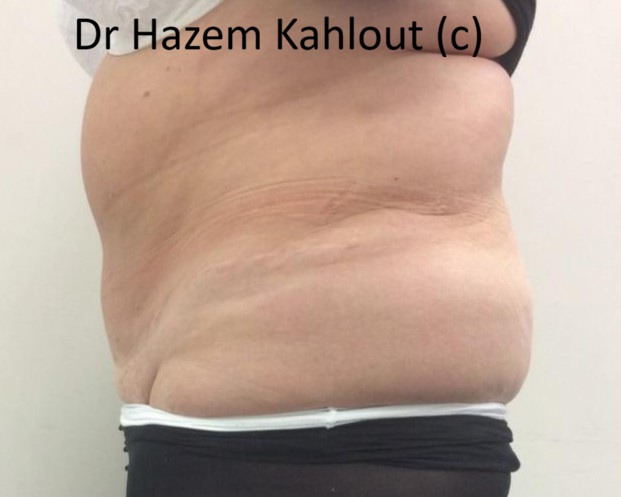
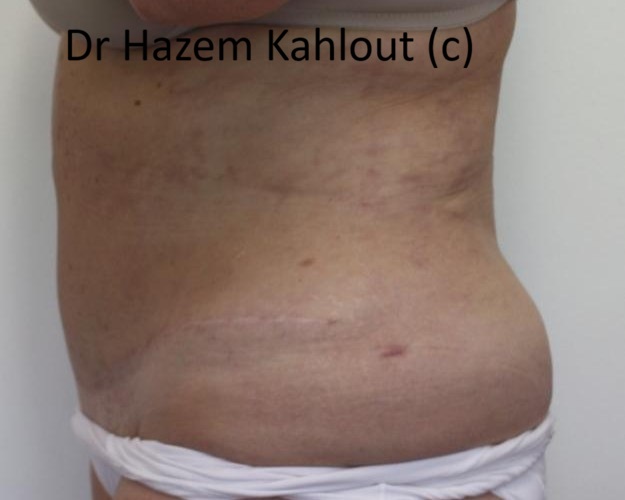
What to expect
I won’t treat sooner than six months after your tummy tuck. We start with a proper consultation and examination. The procedure itself is usually done under local tumescent anaesthesia, so you’re awake, comfortable and home the same day. Most people are back at a desk within a few days, and the final shape keeps refining over roughly three months.
I see these concerns at least once a month. To be honest, many of the women I treat had their tummy tuck elsewhere, in Ireland or abroad, so you won’t be the first to walk in feeling a bit let down.
When liposuction isn’t the answer
This part matters to me. If your bulge comes from visceral fat, a loosened muscle repair or a hernia, taking fat from under the skin won’t fix it, and you’d end up disappointed all over again. In that case, I’ll explain exactly why and point you to the right specialist.
The Bottom Line on Upper Belly Bulge After Tummy Tuck
An upper belly bulge after tummy tuck is common, and most of the time it doesn’t mean your surgery failed. More often, it’s the mark of a surgeon who chose to protect your blood supply. The real question is what’s causing yours.
So give your body six months. Then get examined by someone who can tell swelling, fat and muscle apart. If it turns out to be leftover fat, VASER can safely finish what your tummy tuck started.
Noticing puckered little cones at the ends of your scar as well? Check out our post in this series which covers dog ears after tummy tuck.
And if your upper belly is still bothering you six months on, book a consultation with Dr Hazem Kahlout at Castleknock Cosmetic Clinic in Dublin. We’ll take a proper look together. Finance options are available too.
Frequently Asked Questions
Is an upper belly bulge after a tummy tuck normal?
Yes, it’s really common. A standard tummy tuck takes tissue mainly from below the belly button, and surgeons often go easy on the upper tummy to protect blood supply. Early swelling adds to it, so judge the final shape at around six months.
How do I know if it’s swelling or fat?
Swelling feels firm, gets worse through the day and improves over weeks. Fat is soft, pinchable and stays the same. If nothing has changed by six months, it’s usually leftover fat, but an examination is what confirms it.
How long after a tummy tuck can I have liposuction on my upper abdomen?
I wait at least six months. By then, the swelling has largely settled, the tissues have softened and the blood supply has had time to recover. That way, we can see exactly how much fat is really there and treat it safely.
Can my muscle repair come undone?
It’s uncommon, but it can happen. Watch for a sudden change in shape, a “pop”, bulging on one side or a bulge that pushes out when you cough. A CT scan confirms it, and fixing it needs surgery rather than liposuction.
Will losing weight flatten my upper belly after a tummy tuck?
It depends on the cause. Visceral fat responds well to weight loss, so diet and exercise genuinely help there. Leftover fat under the skin, though, tends to be stubborn and usually responds better to targeted liposuction.
Can VASER fix a bulge if my tummy tuck was done abroad?
Often, yes. Plenty of my patients had surgery abroad. Once six months have passed and an examination confirms leftover fat, VASER can treat it wherever your original operation happened. Just bring along any operation notes you have.
Written & Medically reviewed by Dr Hazem Kahlout, Medical Director, Castleknock Cosmetic Clinic. Dr Kahlout has practised aesthetic medicine since 1998 and is registered with the Medical Council of Ireland.
What do you think? Did you find this blog helpful? Why not join me for meaningful and educational social media posts on Instagram I’d love to hear your comments info@castleknockcosmetics.ie or tweet me @dr_h_kahlout. If you found this blog helpful I’d appreciate a positive review on Google Review and our Facebook page.