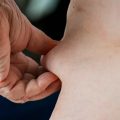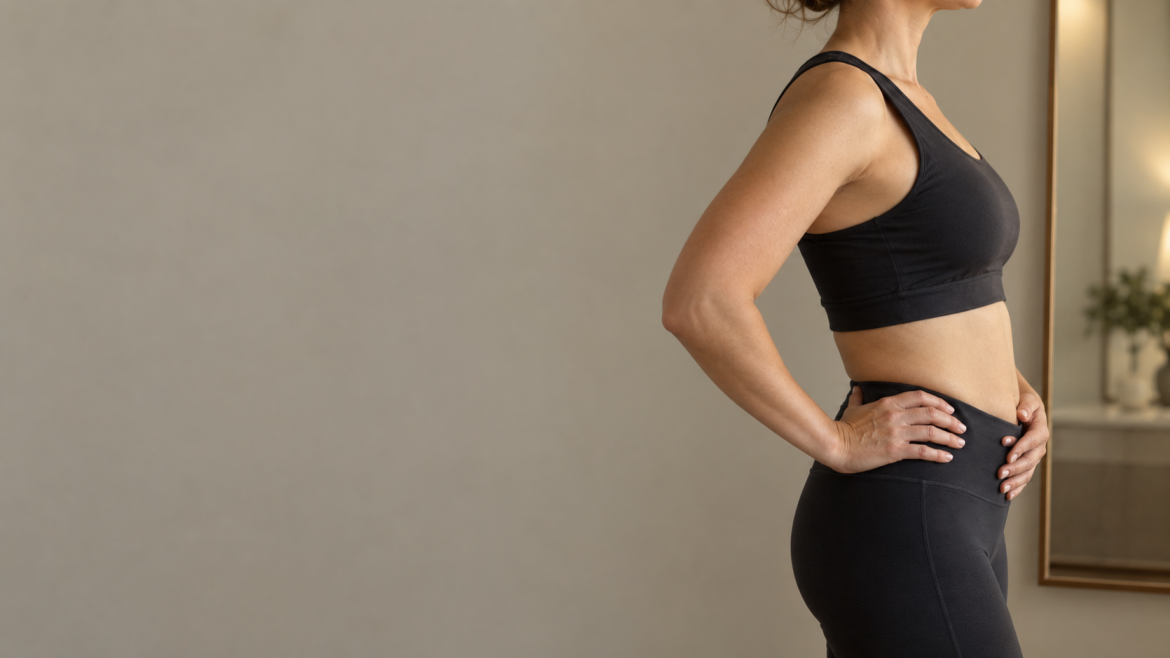
You waited months for your tummy tuck. You researched, saved up, and got through the surgery and the recovery. Then you looked in the mirror and noticed something you didn’t expect. Bulges after tummy tuck surgery are far more common than most people are told, and spotting one doesn’t mean your operation failed.
In this guide, we explain the three bulges’ patients ask about most: dog ears, a puffy mons pubis and an upper belly bulge. Moreover, we cover why they happen, how long you should wait and what can be done. As the medical director of Castleknock Cosmetic Clinic in Dublin, I see patients with these concerns regularly. In fact, many patients arrive after abdominoplasty surgery elsewhere, either in Ireland or abroad. So, if that’s you, you’re in the right place.
Before we start, a quick word of reassurance. Bulges after tummy tuck surgery don’t say anything about your effort, your recovery or your choice of surgeon. They say something about anatomy and healing, and both vary significantly from person to person. As a result, the best response is calm approach rather than panic fix.
Are Bulges After Tummy Tuck Surgery Normal?
Short answer: often, strong maybe. A tummy tuck (abdominoplasty) removes loose skin, tightens the muscle and reshapes the abdomen. However, it’s a big operation, and your body needs time to fully heal. Swelling is the first reason. It can hide revealing your final shape for several months, and it tends to collect low on the abdomen and over the pubic area. Therefore, a bump at week six may look completely different at month six.
Still, not every bulge is swelling. Some come from extra skin at the ends of the scar. Others come from fat that was left in place on purpose. In addition, some come from deeper tissue that surgery on the skin and muscle can’t change. That’s why the cause matters more than the presentation.
What does a normal timeline look like? In the first few weeks after surgery, swelling is at its peak, and the tummy can look rounder than you expected. By three months, most of the obvious swelling would’ve eased, although the lower abdomen can stay puffy for longer. By month six, the shape is much closer to final. Therefore, judging bulges after tummy tuck surgery too early often leads to unnecessary worry. That said, if the area is hard, painful or growing, don’t wait for the calendar.
Here’s the simple rule we use at our clinic. First, wait at least six months after your tummy tuck. Second, have the area properly assessed. Finally, choose the treatment that matches the cause. Indeed, treating the wrong cause is the quickest way to feel disappointed twice.
Dog Ears After a Tummy Tuck
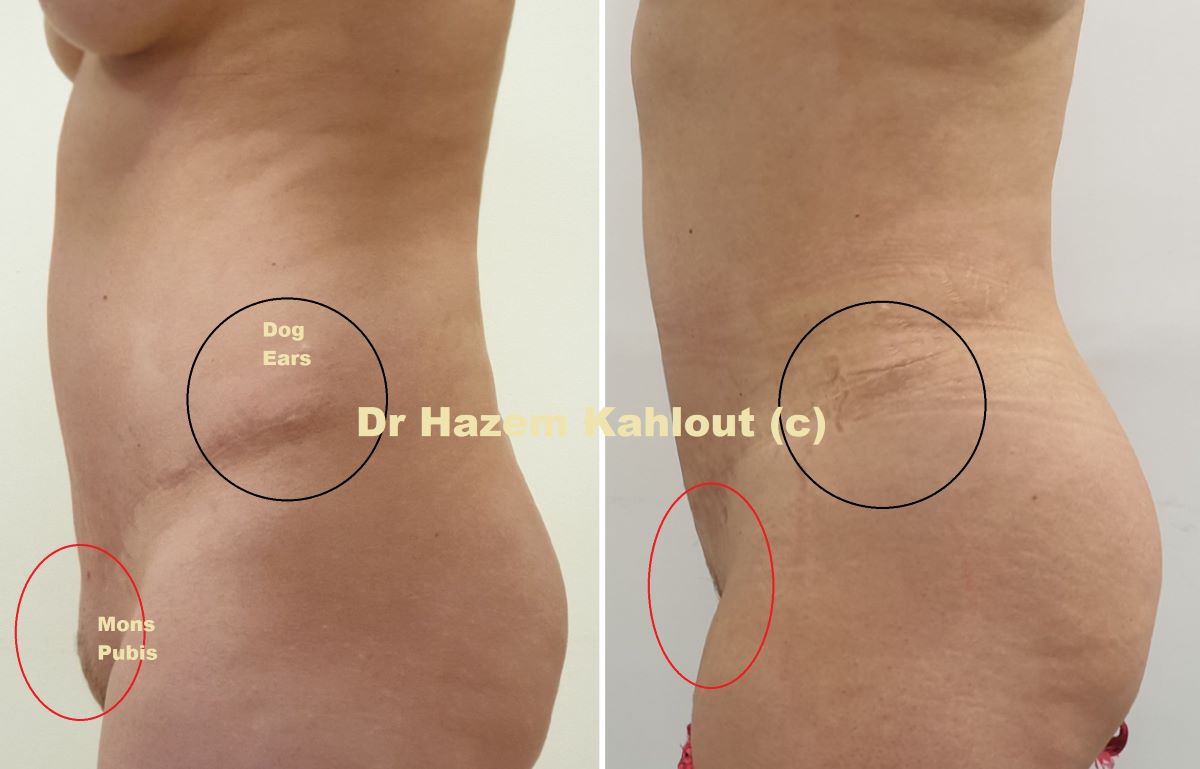
Dog ears are small cone shaped folds of excess skin and fat at the ends of the tummy tuck scar, usually near the hips. Surgeons call this a standing cone deformity. As the name suggests, they stick out a little, like the ears of a dog.
Why do they happen? When a long, curved incision is closed, the two edges rarely match perfectly. Therefore, a little extra tissue can bunch up at the end. Wider hips, significant weight loss and a lot of loose skin make this more likely. Additionally, some dog ears are “false”. They look like the real thing at first, but they’re mostly swelling, so they settle by themselves. We explain causes and timeline in more detail in our guide to dog ears after tummy tuck.
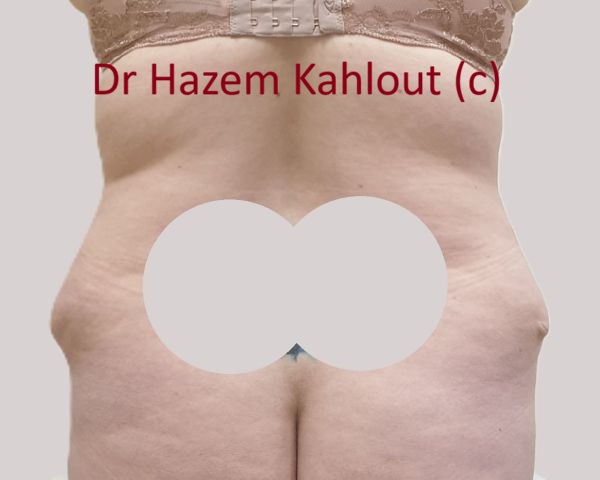
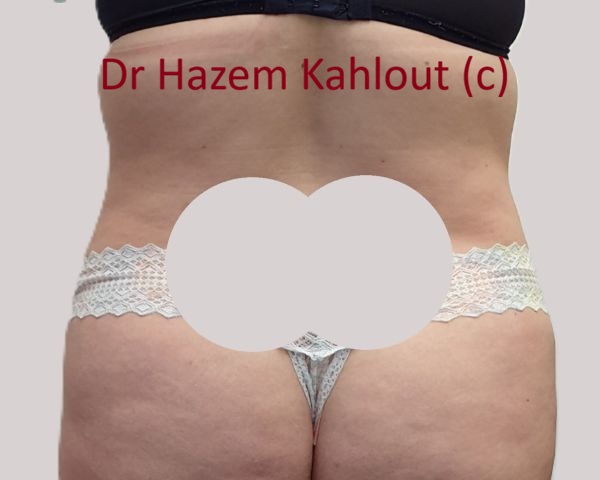
How do you tell a true dog ear from swelling? Press gently. Soft, squishy puffiness that changes through the day is usually swelling. A firm, fixed cone that stays the same size over months is more likely a true dog ear. Of course, an examination is far more reliable than guesswork at home.
How common are they? One widely cited review of 278 abdominoplasties (Stewart et al., 2006) reported dog ears in about 12% of patients, and some surgeons report higher figures in their own practice. In other words, they’re common enough that every tummy tuck surgeon expects to see them.
What can be done? It depends on what’s inside the dog ear. If it’s mostly fat, VASER ultrasound liposuction under local anaesthetic can often refine it. If it’s mostly loose skin, Renuvion J-Plasma can tighten the skin without the need to extend the scar. In our experience, nearly all patients prefer to avoid a longer scar when that’s possible. However, an excision extension is still a good option when the skin excess is too much to tighten, and at the time of your assessment, we’ll tell you honestly which one suits you.
Poofy Mons Pubis (FUPA) After a Tummy Tuck
Many patients call it the “poofy mons” or the “shelf”. Medically, it’s fullness over the mons pubis, the soft area just above your pubic bone. You may also see the term FUPA, which stands for fat upper pubic area. We explain the causes and timeline in more detail in our guide to mons pubis swelling after tummy tuck.
If you’re thinking, “I just want my clothes to fit,” you’re not alone. Among all bulges after tummy tuck surgery, the mons is the one our patients mention most, especially when leggings or swimwear. Fortunately, it’s also one of the areas that responds well to treatment.
So why does it look worse after a tummy tuck? Think of it as contrast. Surgery tightens and flattens the tummy above the scar. As a result, the tissue below the scar looks fuller by comparison. It can also be due to the mechanical pull from the lower abdominal skin upwards. Also, swelling and changes in lymphatic drainage often collect in this area, and the scar line can act as a small step that makes the difference more obvious.
Timing matters here, too. In our clinic’s experience with mons treatments, swelling after VASER settles over 8 to 12 weeks, and the shape keeps improving for around four to six months. Compression garments are usually worn for four to six weeks.
When fat is the cause, VASER liposuction is gentle and can reshape the area precisely. If there’s also loose skin, Renuvion can be added to tighten it. For the full picture, see our guide to mons pubis liposuction. Meanwhile, if the area feels firm or tender, tell your surgeon first. Not every fullness is fat.
Upper Belly Bulge After a Tummy Tuck
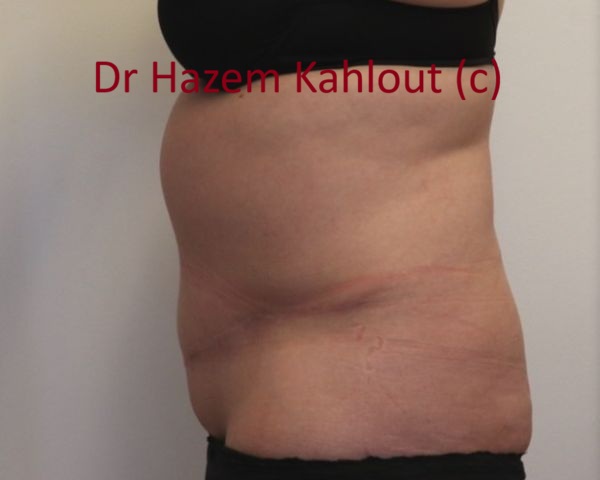
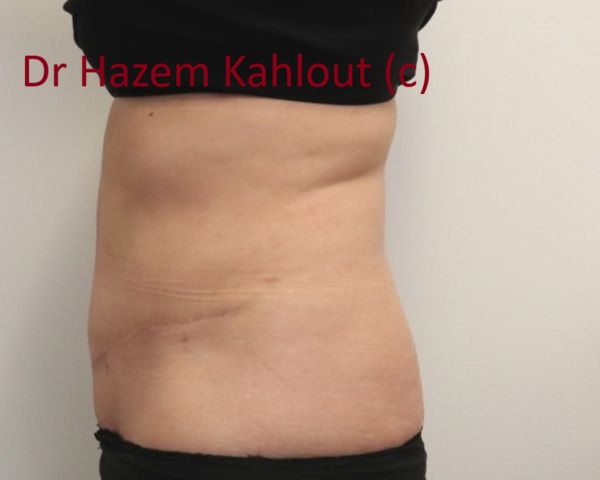
The third concern is a bulge in the upper abdomen, above the navel, often extending to under the ribs. It can be the most upsetting one, because the lower tummy is flat while the upper tummy still sticks out.
It’s also worth knowing that bloating and posture can change how the upper tummy looks from hour to hour. Consequently, a single mirror check on a bad day isn’t a reliable guide. Watching it over a few weeks gives a truer picture.
There are several possible causes. First, surgeons often leave some fat in the upper abdomen on purpose, since removing too much can threaten the blood supply to the skin that just got moved. Second, some people carry visceral fat, which sits deep inside the abdomen around the organs. A tummy tuck can’t remove it. Third, if the muscle repair is loose, or the muscles were very stretched, the upper abdomen may not flatten fully. Finally, swelling and rib shape play a part, too.
Because the causes differ, the treatments differ. VASER liposuction can treat fat that sits under the skin, and it’s the same technique we use for VASER waist contouring. However, it can’t treat visceral fat. Likewise, it can’t repair a weak muscle wall or a hernia. If your examination points to one of those causes, we’ll refer you to the right specialist rather than offer a treatment that won’t help.
That’s one reason we always examine you properly first. Assessing the skin, the muscle tone and any signs of a hernia is done at your consultation. And it saves you from treating the wrong thing.
Why Surgeons Stay Cautious: Protecting Blood Supply
You might wonder why a surgeon would leave any of this behind. In short, safety. A tummy tuck lifts a large flap of skin and fat, and that flap depends on a limited blood supply. If too much tissue is removed, or the closure is too tight, healing problems such as wound breakdown can follow. Consequently, many surgeons prefer a careful first operation, with the option of fine-tuning later.
This doesn’t mean every bulge is a sign of safe surgery. Some are simple technical imperfections, and some are just normal healing. It’s fairer to say they’re common trade-offs that can usually be refined once everything has healed. For general information about risks and recovery, the British Association of Aesthetic Plastic Surgeons and the NHS both offer helpful, independent guidance.
Nevertheless, if something looks seriously wrong, don’t wait. Persistent redness, fluid, rapid swelling or severe pain need prompt medical review.
So, what should you take from all this? Most bulges after tummy tuck surgery fall into one of three groups: swelling that will settle, tissue that was left behind for safety or accidentally, or an issue that needs a different kind of treatment. Knowing which group you’re in changes everything. It turns a vague worry into a clear plan, and it stops you chasing treatments that were never going to work. Equally, it lets you enjoy the parts of your result that are going well, because there usually are plenty.
How to Fix Bulges After Tummy Tuck: Revision in Dublin
Ready to do something about it? Here’s the path we recommend. First, wait at least six months after your tummy tuck, so swelling can settle and the tissues can soften. Second, book an assessment. We’ll check the skin, fat, muscle and scar so we know exactly what we’re dealing with. Third, we choose the treatment that fits.
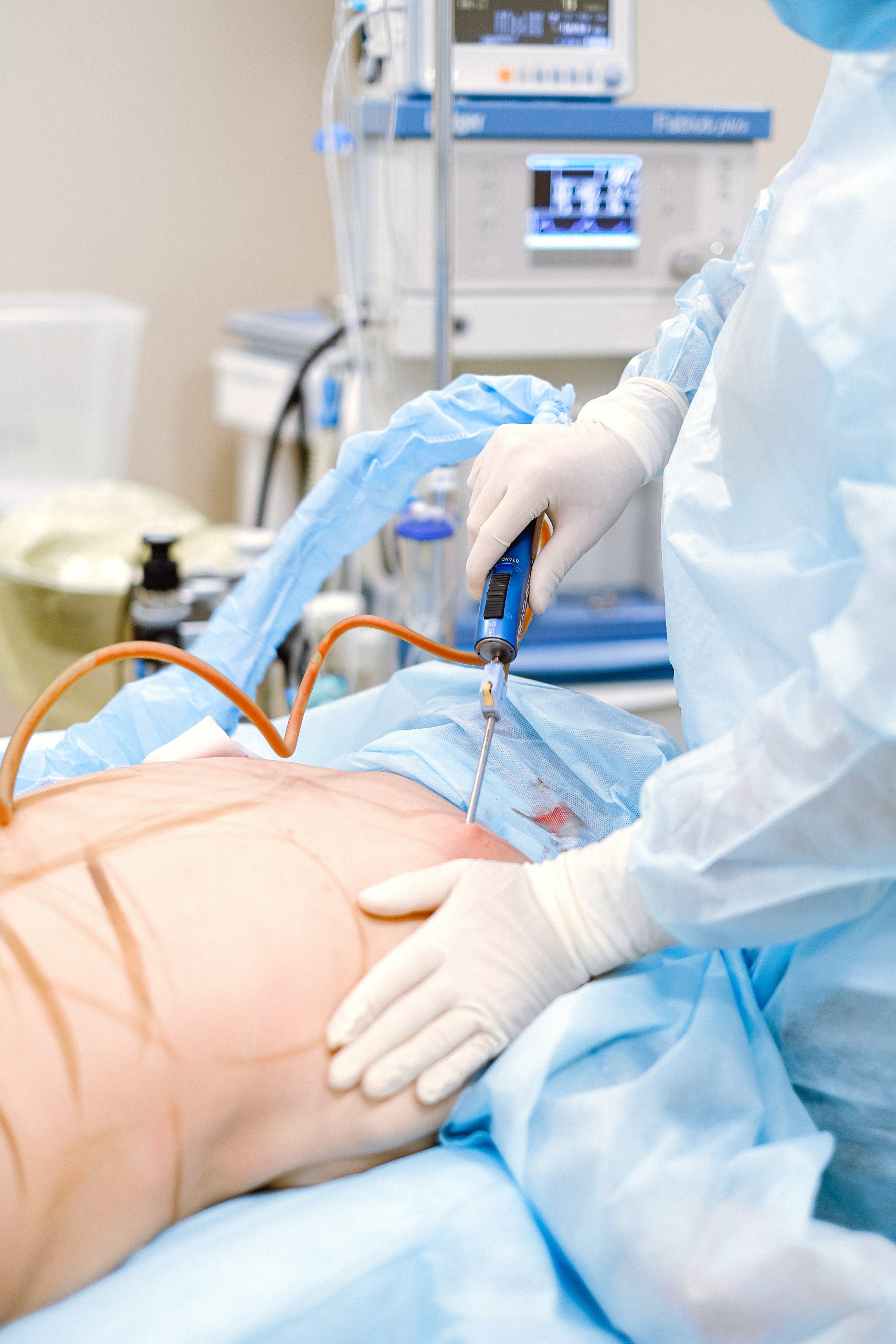
Fat responds well to VASER ultrasound liposuction, done under local anaesthetic. When present, loose skin may need Renuvion skin tightening, which you can read about on our Renuvion J-Plasma page. Occasionally, a small excision is still the best answer. And when the problem isn’t fat at all, we’ll refer you on.
We usually treat one concern at a time, with sessions spaced about a month apart. That’s gentler on your body and easier on your recovery. Also, results develop gradually, so expect improvement over several months, not overnight. If you had your surgery elsewhere or abroad, that’s fine.
Whoever you choose, ask a few direct questions. What exactly is causing my bulge? Which treatment suits that cause? What results are realistic? Can you show me examples of your work? And what happens if it doesn’t work? A clear, honest answer about bulges after tummy tuck concerns matters far more than any promise of perfection.
Conclusion
Bulges after tummy tuck surgery can feel discouraging, but they’re common and usually fixable. Dog ears, a puffy mons and an upper belly bulge each have different causes, so each needs a different answer. In you recovery, wait six months, get a proper assessment and choose the treatment that fits. If you’d like a clear, honest opinion, book a consultation with Dr Kahlout at Castleknock Cosmetic Clinic. He’ll look at your results and tell you what’s realistic.
Frequently Asked Questions
Are bulges after tummy tuck surgery normal?
Yes, they’re common. Swelling, extra skin at the scar ends and leftover fat can all cause them, and many settle over several months.
What are dog ears, and will they go away?
Dog ears are small folds of skin and fat at the ends of the scar. False ones are swelling and fade. True ones usually stay, but they can be treated.
Why does my mons pubis look bigger after a tummy tuck?
The tummy above is tighter, so the mons looks fuller by contrast. Swelling and fat add to it. VASER can reshape it once you’ve healed.
Why do I still have an upper belly bulge?
Causes include leftover fat, visceral fat, a loose muscle repair and swelling. An examination shows which one applies to you.
How long should I wait before treating a bulge?
We recommend at least six months after your tummy tuck, so swelling can settle and we can judge the true shape.
Can VASER and Renuvion fix bulges without another operation?
Often, for fat and mild skin laxity. However, visceral fat, hernias or very loose skin may need other solutions, and results vary from person to person.
Written & Medically reviewed by Dr Hazem Kahlout, Medical Director, Castleknock Cosmetic Clinic. Dr Kahlout has practised aesthetic medicine since 1998 and is registered with the Medical Council of Ireland.
What do you think? Did you find this blog helpful? Why not join me for meaningful and educational social media posts on Instagram I’d love to hear your comments info@castleknockcosmetics.ie or tweet me @dr_h_kahlout. If you found this blog helpful I’d appreciate a positive review on Google Review and our Facebook page.