Will dog ears go away after tummy tuck?
For many women, it is not the appearance that bothers them first. It’s the band. A few months after a tummy tuck, your jeans, work trousers or gym leggings snag on two little ridges in your hips, exactly at the end of the scar. The parts of your tummy that are smooth and flat only increase the prominence of those two spots. Then you google it, and there is a name for them: the dog ears after tummy tuck.
You’re not alone if that sounds familiar. Far from it. The small puckers are among the most common things I see in my Dublin clinic. Also, mons pubis swelling after tummy tuck and upper belly bulge after tummy tuck. Together, they are all part of the common after-effects of a tummy tuck that a lot of women worry about and rarely talk about. Let us discuss them. I will explain why they occur, whether they will spontaneously resolve, and how we can habitually fix them without lengthening your scar in any way.
What Are Dog Ears After a Tummy Tuck?
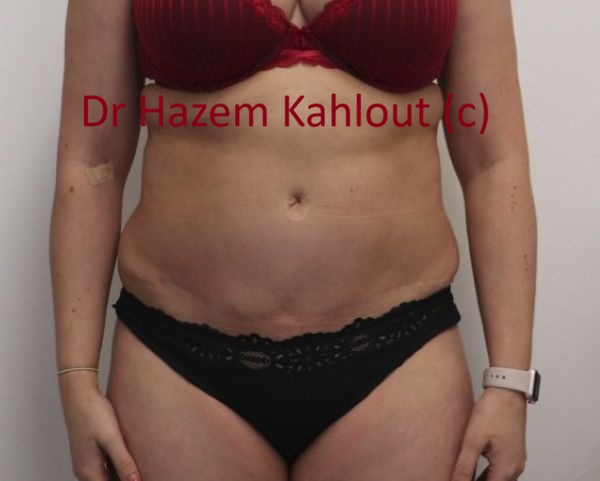
Dog ears are small cones or folds of tissue sitting at the outer ends of a tummy tuck scar. Surgeons have a grand name for them, a “standing cone deformity”. But honestly, the nickname says it better. Picture the folded tip of a dog’s ear and you’ve got it.
The cause is mostly geometry. During a tummy tuck, your surgeon removes a wide, curved slice of skin from your lower tummy. That leaves the top edge of the wound longer than the bottom edge. And when you stitch a longer edge to a shorter one, the extra has to go somewhere. It bunches up at the ends.
Here’s the thing. A scar lies nicely flat when it’s roughly three times longer than the width of skin taken out. A tummy tuck almost never follows that rule, because the incision is planned to sit low and stay hidden. In fact, tummy tuck incisions usually run from hip bone to hip bone, and no further. Meanwhile, the amount of skin removed is often generous.
Think about folding a sheet of paper, and then folding a thin sponge, like a shoulder pad. The sponge fold sticks up a lot more, doesn’t it? It’s the same with your hips. The more fat you carry there, the more a dog ear shows.
Why Dog Ears Are an Expected Outcome, Not a Surgical Failure
I know the first thought. Did my surgeon mess this up? To be honest, usually not. Dog ears are far more often the result of a deliberate trade-off than a mistake.
Look at it from the surgeon’s side of the table. They’re trying to keep your scar short and low, so it disappears under your underwear or bikini. At the same time, they want to take away as much loose skin as they safely can. The more skin that comes away, the flatter your tummy. But the more skin that comes away, the bigger the mismatch at the scar ends too. So, in a funny way, a better result in the middle can mean more puckering at the sides.
And other things pile on. Fuller hips or flanks. Looser skin around the waist. Weight going up or down after surgery. Any of these makes dog ears more likely.
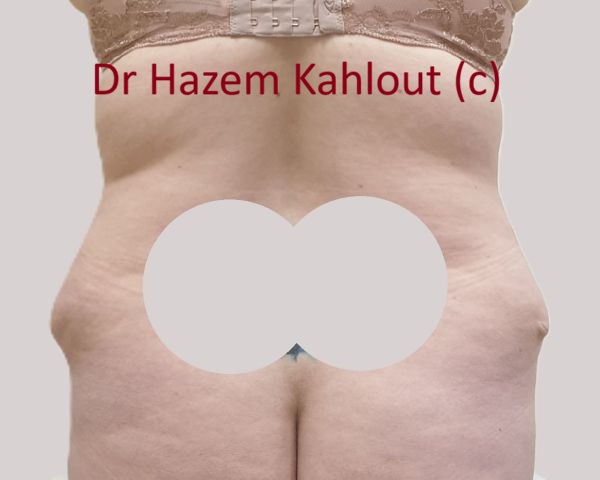
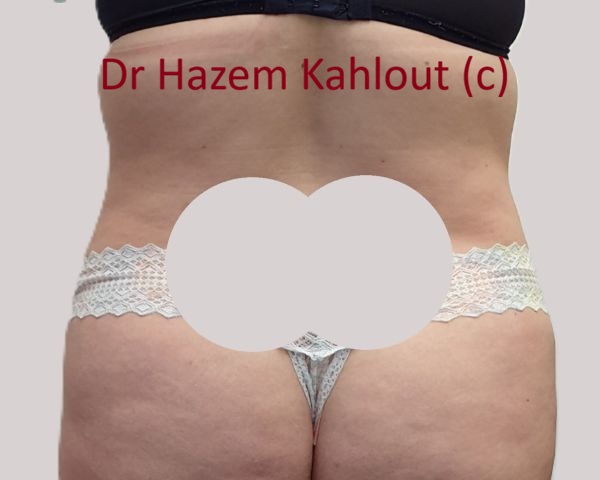
This isn’t rare either. Dog ears remain one of the most common complaints after a tummy tuck. In a UK review of 278 tummy tucks, around 12% of patients developed them, roughly one in eight. And in a US series of 400 patients, dog ears were the reason behind 7 of the 24 repeat operations. That’s nearly three in ten.
So, you’re in good company. Plenty of the women come to me having had their tummy tuck somewhere else, both here in Ireland or abroad, and dog ears are one of the top reasons they end up in my clinic.
Will Dog Ears Go Away After a Tummy Tuck?
Mild dog ears caused by swelling often soften within three to six months of a tummy tuck. True dog ears made of extra skin or fat, though, usually stay put. If yours hasn’t changed by six months, it’s unlikely to vanish without some help.
Early on, swelling is a big part of the story. After surgery, fluid likes to gather at the hips, and the little drainage channels (your lymphatics) take months to recover. As a result, in the first few weeks, lots of women get what we call “false dog ears”. They look alarming, I know. But many of them quietly shrink as you heal.
Not every bump is a swelling. Three things tend to hang around: a real fold of extra skin, a pad of fat parked at the end of the scar, or a firm ridge of scar tissue underneath. Sometimes it’s a bit of all three.
That’s exactly why I never treat dog ears before six months. Go in too early and you risk upsetting drainage pathways that are still healing. Worse, you might end up treating swelling that would have gone down by itself, given a little patience.
By six months, though, the picture is much clearer. In my experience, if a dog ear hasn’t changed by then, it’s not going to settle on its own. And that’s not bad news, really. It just means we can finally see what’s there and plan something smaller and more precise.
Skin, Fat or Both? How Dog Ears Are Assessed
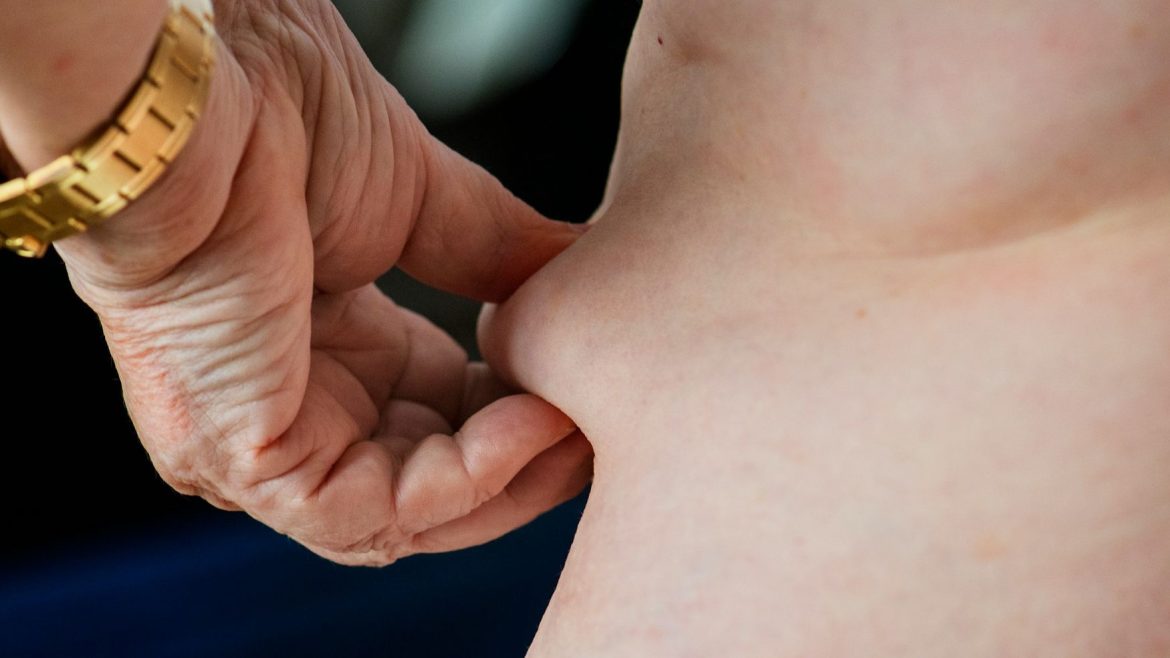
Before we talk treatment, we need to know what your dog ear is actually made of. Photos only tell half the story, so I always examine in person. I’ll look at you standing up and lying down, and I’ll gently pinch the area to feel how thick it is.
If it’s soft, thick and pinchable, it’s mostly fat, and that’s the sweet spot for VASER. If it’s a thin, empty sort of fold, it’s mostly skin, so we need to tighten it rather than empty it. And if it’s a fatty pad with some loose skin draped over it? That’s a mix, which is honestly what I see most of the time. Mixed dog ears usually do best with VASER and Renuvion together.
It’s worth ruling out a couple of look-alikes too. A seroma is a pocket of fluid under the skin. It can feel soft, almost like a water balloon, and it might sit away from the scar end. A hypertrophic scar is different again: raised, red and firm, sitting right along the scar line itself. Both need a different plan, which is one more reason an in-person examination is essential.
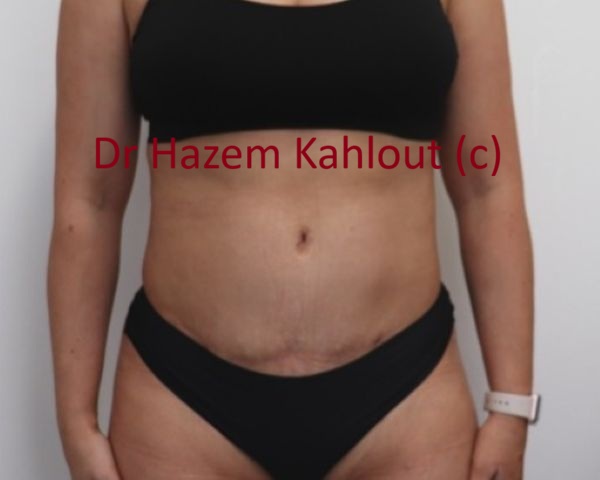
VASER Liposuction for Tummy Tuck Dog Ears
When fat is the main culprit, VASER liposuction is my preferred solution. To see why, it helps to know what’s going on under the skin.
After a tummy tuck, the tissue at your scar ends isn’t soft, normal fat anymore. It’s threaded with scar tissue from the first operation, a bit like sinew running through it. Standard liposuction can really struggle with that. The cannula meets resistance, fat comes out unevenly, and the result can end up lumpy.
VASER works differently. It uses ultrasound energy to loosen and emulsify the fat before it’s removed, while leaving nerves, blood vessels and connective tissue alone. The VASER it slips through that hardened, fibrous tissue far more gently and evenly.
And precision matters here. The goal isn’t just to suck out the cone. I feather the area so the end of your scar blends smoothly into your flank and waist, bringing back the natural curve of your hourglass waistline. On top of that, the gentle heating from VASER’s ultrasound energy helps the skin shrink back and tighten over the treated spot.
The procedure itself is easy on you. We do it under local tumescent anaesthetic, so you’re awake and comfortable the whole time. It takes roughly an hour. You walk out the same day, and most people are back at their desk within a few days.
I treat dog ears like these at least once a month. For most fat-heavy ones, VASER liposuction on its own gives a smooth, natural result, with no extra scar at all. If you’d like to go deeper, you can read how VASER corrects contour problems after a tummy tuck.
When Loose Skin Is the Problem: Tightening Instead of a Longer Scar
Sometimes, though, the dog ear is mostly skin. And here liposuction alone won’t help. Take the fat out from under a loose fold and you’re left with an emptier, floppier fold. Not the goal.
The traditional fix is to cut the extra skin away. The catch? That means stretching your tummy tuck scar further around your hip. For a lot of women, that’s the very thing they dreaded most… one scar leading to another, and then maybe another.
Thankfully, there’s often a gentler way. In these cases, I use Renuvion skin tightening, which is also called J-Plasma. I use Renuvion alongside VASER. Renuvion sends helium plasma and radiofrequency energy under the skin, which makes the tissue contract and tighten from the inside. In April 2023, the US FDA cleared the Renuvion for this use after liposuction in body contouring (FDA clearance for use after liposuction).
In my practice, nearly everyone with a skin-heavy dog ear chooses this route over a longer scar. I can’t say I blame them.
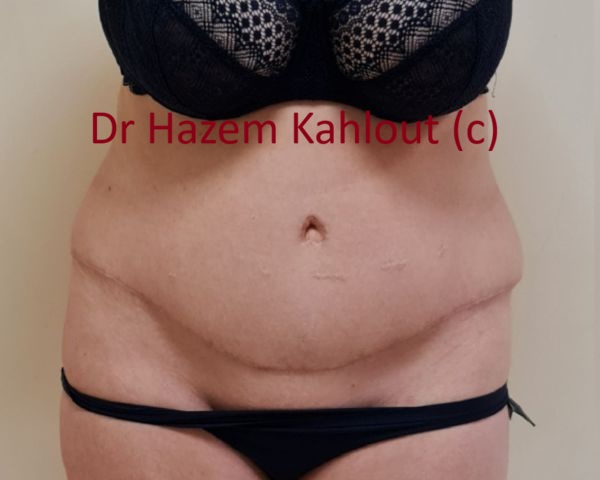
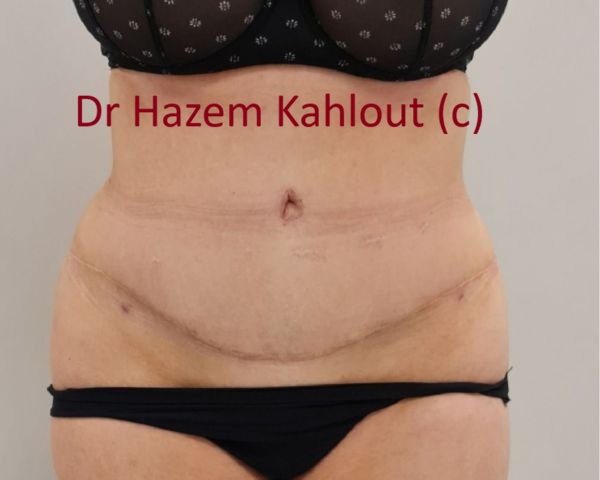
That said, it has its limits. A large, heavy fold of skin may still need to be surgically removed. If I think that’s you, I’ll tell you straight at your consultation.
Tummy Tuck Revision in Dublin: What to Expect
It all starts with a chat and a proper examination. We’ll work out together whether your dog ear is skin, fat or both. I’ll be honest about what’s realistically achievable, and I’ll talk you through your options without any pressure.
Treatment can start from six months after your tummy tuck, whether you had it done in Ireland or abroad. Castleknock Cosmetic Clinic has been looking after patients for over 25 years, and I’ve practised aesthetic medicine since 1998, with a real focus on VASER body contouring.
If your dog ears are getting to you, book a consultation and we’ll take a look together. Finance options are available too, if that helps.
Conclusion
Dog ears after a tummy tuck are annoying. There’s no getting around that. But they’re rarely a sign that anything went wrong. They’re simply what happens when a generous amount of skin comes out through a short, hidden scar. So give them six months. If the pucker’s still there, get it examined and find out whether it’s skin, fat or both. More often than not, VASER liposuction, with Renuvion where needed, can smooth those scar ends without adding a single centimetre of scar. The smooth, flat shape you went through all this for? It’s usually closer than you think. For the full picture of what to expect, see our guide to common concerns after abdominoplasty.
Frequently Asked Questions
Are dog ears after a tummy tuck a sign my surgeon made a mistake?
Usually not. They’re a well-known trade-off between keeping your scar short and hidden and removing enough skin for a flat result. Even very experienced surgeons see them, especially in women with fuller hips or flanks.
How long after a tummy tuck can dog ears be treated?
I wait at least six months. By then most of the swelling has cleared, the scar has softened, and we can see whether it’s skin, fat or both. Go earlier and you might treat swelling that would’ve settled anyway.
Can dog ears be fixed without extending the scar?
Often, yes. Fatty dog ears respond really well to VASER liposuction, and looser skin can be tightened with Renuvion. It’s only the very large skin folds that usually need cutting out, which does lengthen the scar.
Is VASER for dog ears done under local anaesthetic?
It is. We do it in the clinic under local tumescent anaesthetic. It takes about an hour, you walk out the same day, and most people are back at a desk job within a few days.
Can dog ears come back after treatment?
It’s not common, as long as your weight stays fairly steady. Big weight changes later on can reshape your hips and waist, just like anywhere else on your body.
What’s the difference between a dog ear and a seroma? A dog ear is a fold or bulge of skin and fat at the end of the scar. A seroma is a collection of fluid under the skin. If a swelling grows quickly, feels tender or looks red, get in touch with your surgeon promptly.
Written & Medically reviewed by Dr Hazem Kahlout, Medical Director, Castleknock Cosmetic Clinic. Dr Kahlout has practised aesthetic medicine since 1998 and is registered with the Medical Council of Ireland.
What do you think? Did you find this blog helpful? Why not join me for meaningful and educational social media posts on Instagram I’d love to hear your comments info@castleknockcosmetics.ie or tweet me @dr_h_kahlout. If you found this blog helpful I’d appreciate a positive review on Google Review and our Facebook page.