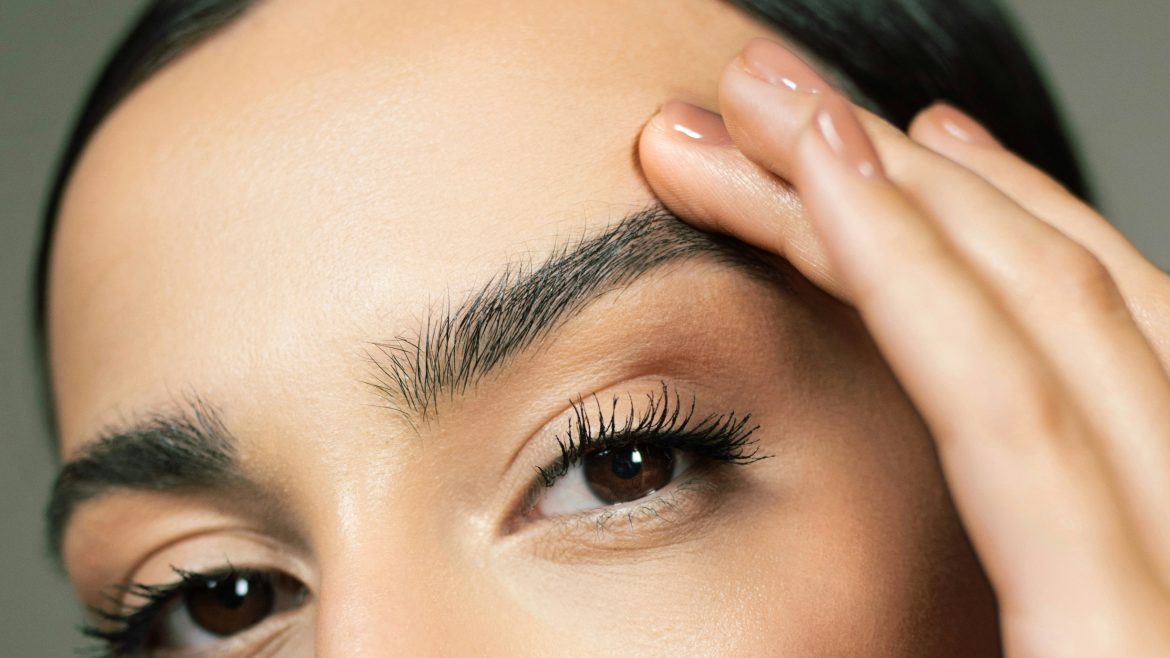
If you’ve ever looked in the mirror and wished your eyebrows sat just a little higher, opening up your eyes and making you look more awake, you’ve probably heard of the botulinum toxin brow lift. It sounds almost too good to be true: a few tiny injections, no surgery, and a lifted, refreshed appearance. But here’s what most websites won’t tell you: a chemical brow lift doesn’t work for everyone. In fact, for some people, it produces almost no visible lift at all. And that’s not the injector’s fault but rather it’s your unique anatomy.
The good news? You can find out if you’re a good candidate in about 30 seconds, using nothing more than a pen. And once you understand which muscles the botulinum toxin targets (and which it must avoid), you’ll know exactly why some people get beautiful results while others see little change.
This blog brings both pieces together: the simple at-home test and the detailed muscle anatomy. By the end, you’ll know whether a BTX non-surgical brow lift is right for you, and how to set realistic expectations.
Part 1: The Big Misunderstanding About Botulinum Toxin Brow Lifts
Before we talk about tests or muscles, let’s clear up a very common myth. The neuromuscular toxin does not lift the brow by pushing it upward. Instead, it works by relaxing specific muscles that pull the brow down. Once those downward-pulling muscles are relaxed, your natural lifting muscles (which were always there) can do their job more easily. Think of it like releasing a parking brake while parked on a slope. The car doesn’t need a push; it simply stops being held back and rolls back. This is why the procedure is called a “chemical brow lift” rather than a surgical one.
The effect is almost always subtle, not dramatic like a browpexy or forehead lift. But for the right candidate, subtle is exactly what works: eyes look more open, the face looks less tired, and no one can tell you had “work done.” However, if your specific muscle anatomy doesn’t create reasonably strong downward pull, relaxing those muscles won’t produce a visible lift. And that’s where the pen test comes in.
Part 2: The At-Home Pen Test – Find Out If You’re a Candidate
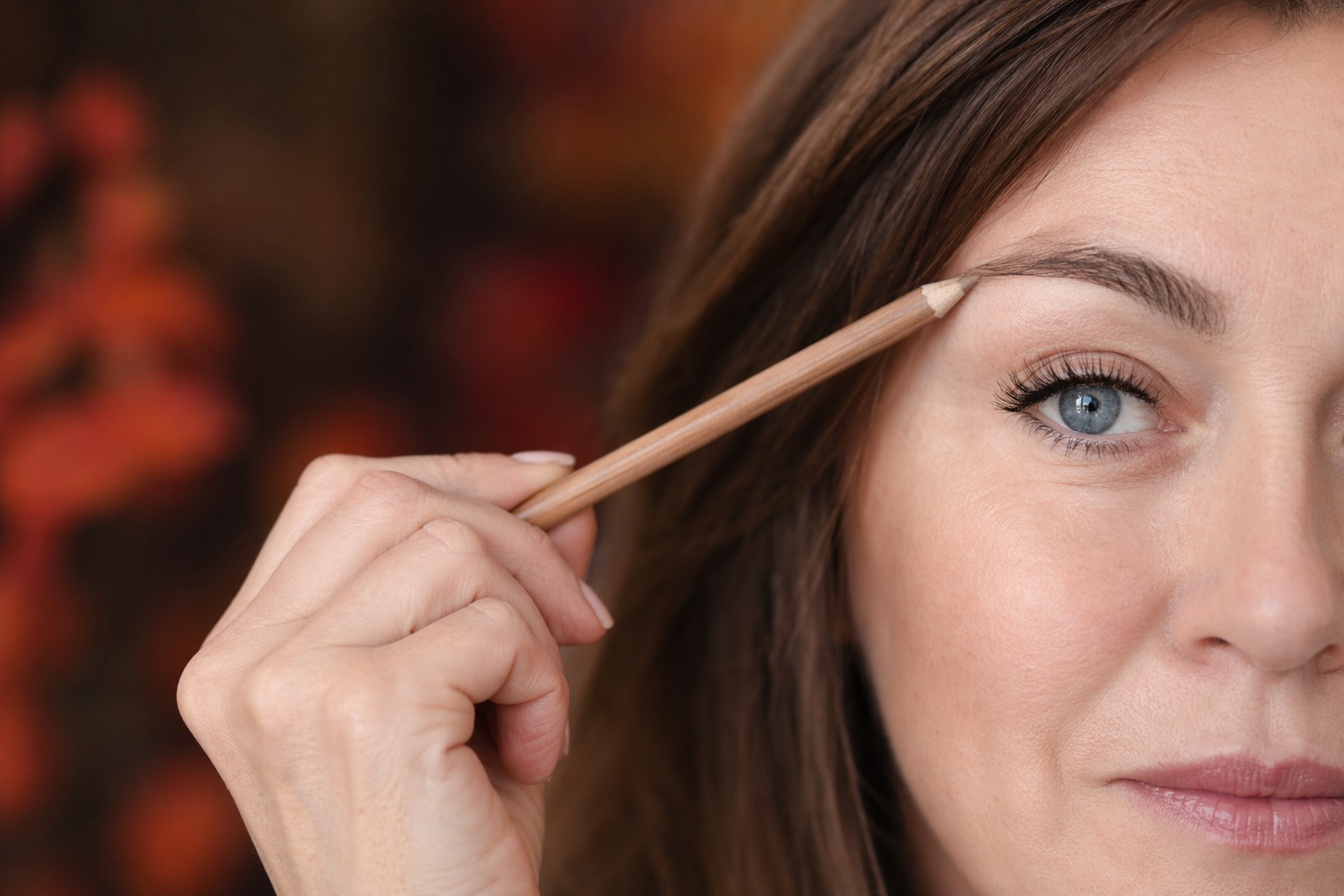
This simple test is used by many seasoned aesthetic doctors. It requires no special equipment and takes a few seconds. What You’ll Need:
- A pen, pencil, or cotton swab (Q-tip)
- A mirror
- Good lighting
Step-by-Step Instructions:
Stand in front of the mirror in good lighting. Hold the Q-Tip or pen vertically (straight up and down) so that it just touches the tail of your eyebrow (the outer end, closest to your temple).
Keep the pen perfectly still. Do not move it.
Now, tightly squeeze your eyes shut – as if you’re trying to keep sand or water out.
While squeezing, watch the tail of your brow. Does it move? And if so, in which direction?
How to Interpret the Results:
Good Candidate for a Botulinum Toxin Brow Lift:
If your brow tail moves downward past the marker’s starting point (below where the pen or Q-Tip was touching), your downward depressor muscles are actively pulling your brow down. Relaxing those muscles with botulinum toxin will allow a noticeable and attractive lift.
Poor Candidate for a BTX Brow Lift:
If your brow tail does not move down past the starting point—or moves very little—then your muscle dynamics will not produce a significant lift. The toxin may still soften wrinkles in the area, but you will not achieve that “open-eye” brow lift effect.
Why This Test Works (And What It Tells You)
The pen test is a functional assessment of your orbicularis oculi muscle (the muscle that closes your eyelids) at the tail of your brow. That muscle, when overactive, pulls the outer brow downward.
If you see significant downward movement when you squeeze your eyes shut, that muscle is strong and active. Botulinum toxin injected at the tail of the brow will relax it, allowing the opposing forehead muscle (the frontalis) to lift the outer brow.
If you see little to no downward movement, that muscle is already weak or not naturally positioned to create a lift. Injection muscle relaxing botulinum toxin won’t change that.
Important caveat: The pen/Q-Tip test is a helpful screening tool, not a medical diagnosis. An experienced doctor will also assess the whole presentation. Your skin laxity, brow symmetry, prior treatments, and overall facial anatomy. But as a first step, it’s surprisingly accurate.
Part 3: The Muscles Behind a Botulinum Toxin Brow Lift
Now that you know whether you’re a candidate, let’s dive into how the lift actually happens. This will help you understand why the pen test matters and what you should expect from treatment. There are three key muscle groups that control brow position. Botulinum toxin targets two of them and deliberately avoids a third.
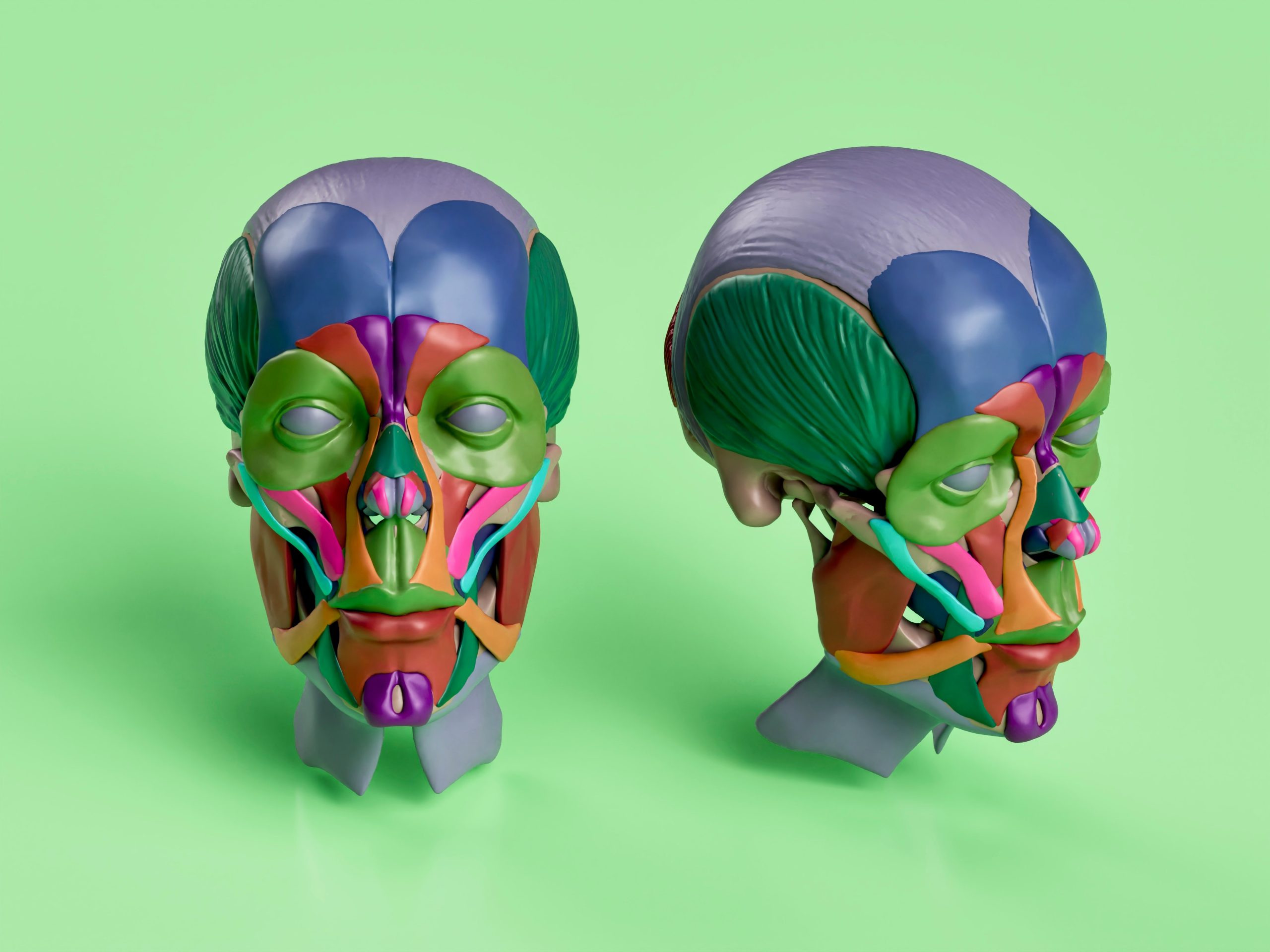
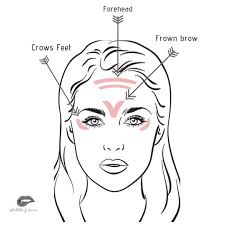
Muscle #1: Procerus & Corrugators (The Inner Brow Down-Pullers)
Location: Between your eyebrows and the inner brow area.
What they do: These muscles pull your inner brows downward and together. They create the famous “11’s line” (frown lines) between your brows and contribute to a tired, angry, or heavy appearance.
Chemical brow lift strategy: Injecting botulinum toxin into these muscles (typically five standard injection points) relaxes their downward pull. This allows the inner corner of the brow to lift slightly, opening up the inner part of the eye.
For patients with hooded eyes that are heaviest near the nose, this can make a meaningful difference.
Muscle #2: Frontalis (The Natural Brow Lifter)
Location: Across your entire forehead.
What it does: This is your only natural brow elevator. When the frontalis contracts, your brows go up.
Critical warning: If the toxin is injected into the lower part of the frontalis, it will paralyze the muscle, and your brows will actually drop. This is the most common mistake inexperienced injectors make when trying to achieve a brow lift.
The rule for a successful botulinum toxin brow lift: Leave the frontalis completely untouched so it can work freely.
Muscle #3: Orbicularis Oculi (The Outer Brow Down-Puller)
Location: Around the outer eye – this is the muscle that closes your eyelids (think crow’s feet area).
What it does: The tail of this muscle (near the outer brow) pulls the outer brow downward.
Botulinum toxin strategy: Small, precise injections at the tail of the brow relax this downward pull, allowing the outer brow to lift.
This is the muscle you tested with the pen. If your pen test showed downward movement, this muscle is a great target.
The Lift Formula (Simple Version)
| Muscle | Action | BTX Goals |
| Procerus & Corrugators | Pull inner brow down | Inject (relax) |
| Frontalis | Lifts entire brow | Do NOT inject |
| Orbicularis Oculi (tail) | Pulls outer brow down | Inject (relax) |
When we relax the down-pullers (procerus, corrugators, and outer orbicularis) while preserving the lifter (frontalis), the frontalis can finally lift the brows without being fought. The result is a subtle but real lift.
Part 4: Special Focus – Botulinum Toxin Brow Lift for Hooded Eyes
Hooded eyes occur when excess skin and soft tissue sit above the eyelid crease, sometimes resting on or near the eyelashes. This can make eyes look smaller, tired, or older than they actually are.
A chemical brow lift is not a replacement for surgical blepharoplasty (eyelid surgery). However, for people with mild to moderate hooding, it can offer meaningful improvement:
- Less downward pressure on the upper eyelid
- A slightly more visible eyelid crease
- A less “heavy” or tired resting expression
- Easier application of eyeshadow or eyeliner
The mechanism is exactly what we described above: by relaxing the inner and outer down-pullers, the frontalis can lift the entire brow a few millimetres. That small lift can reduce the appearance of hooding significantly for some patients.
But here’s the honest truth: If your brows are very low-set or your hooding is severe (skin touching or covering your lashes), botulinum toxin will not give you the result you want. That’s when you should consider a surgical brow lift or blepharoplasty.
Part 5: Putting it all together
Who Is the Ideal Candidate?
- Has a positive pen test (brow tail moves down past the marker)
- Has mild to moderate hooding or heaviness in the brow area
- Wants a subtle, natural lift – not a dramatic change
- Has realistic expectations about what toxin injections can (and cannot) do
- Has a frontalis muscle that is not already over-paralyzed from prior BTX
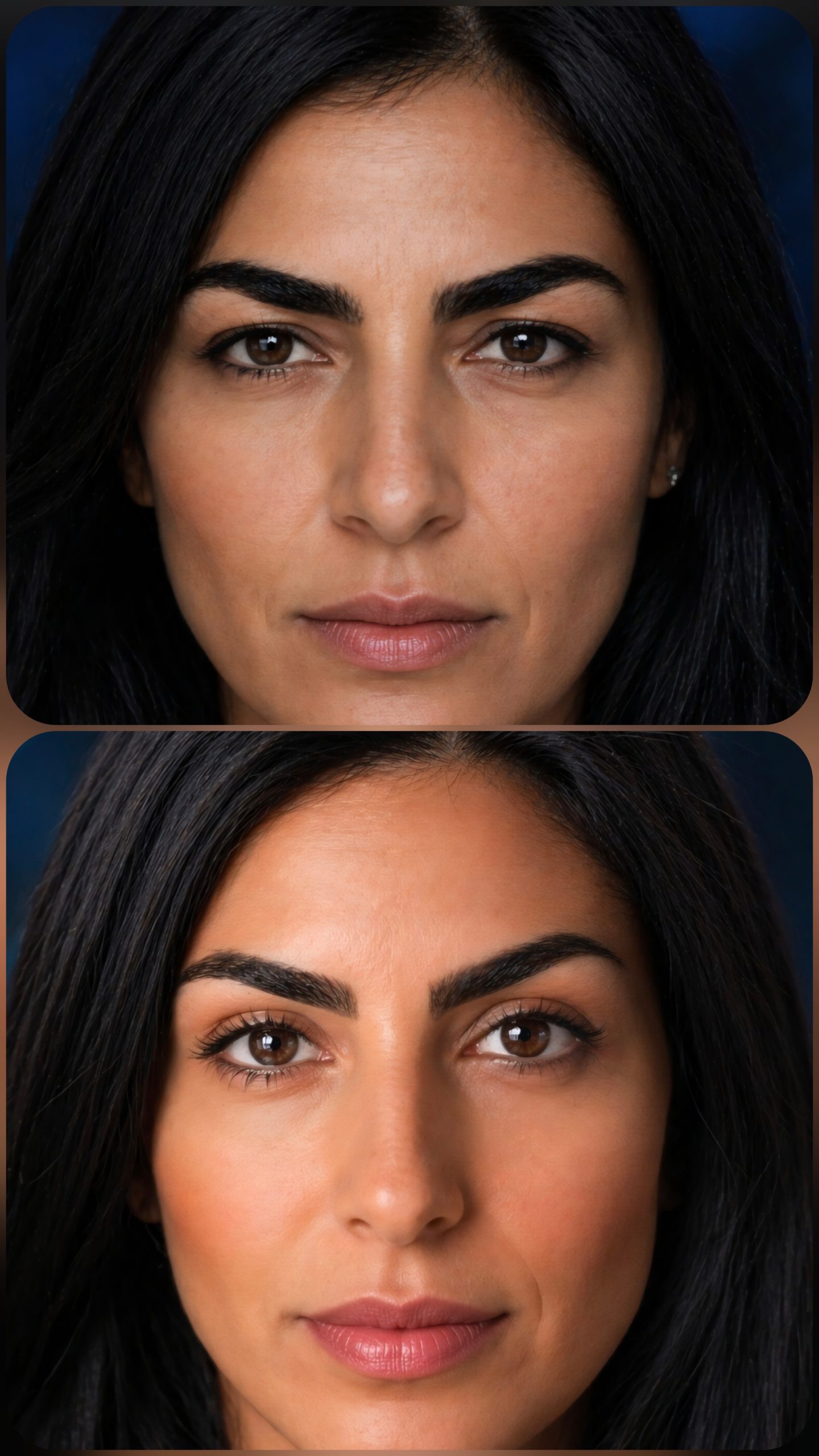
The poor candidate:
- Has a negative pen test (little to no downward movement)
- Has very low-set, thick, heavy brows (anatomy limits lift)
- Expects a surgical-level result from injections
- Has already had muscle relaxing injections in the lower forehead (which drops brows)
Part 6: What to Expect from the Treatment – Realistic Outcomes
If you are a good candidate, here is what a typical botulinum toxin brow lift feels like:
Day of treatment: 5–7 small injections around the inner brow and the tail of the brow. Takes 5–10 minutes. Mild pinching sensation.
Days 1–4: No visible change. You may feel slight heaviness.
Days 5–8: You may notice the inner brow starting to relax and lift slightly.
Days 10–14: Full effect is visible. The lift is subtle – typically 1–3 millimetres – but enough to look more awake.
Months 3–4: Results gradually fade. Muscle movement returns.
Maintenance: Repeat every 3–4 months to maintain the lift.
What the lift looks like:
You will not look “surprised.” Instead, your resting expression will shift from tired or neutral to slightly more open and approachable. Friends may say you look well-rested, but they won’t know why.
Part 7: What If You’re Not a Candidate?
If you tried the pen test and saw no downward movement – or if you have very heavy, low brows – don’t be discouraged. You have other excellent options:
Temple filler: Injecting hyaluronic acid filler into the temples can lift the outer brow indirectly by restoring volume loss.
Eyebrow filler: Injecting dermal filler into the eyebrow – can emboss the eyebrow – and indirectly stretch the skin projection and cause a lift.
Surgical brow lift: A permanent solution for significant brow ptosis (drooping).
Upper blepharoplasty: Removes excess eyelid skin directly – often the best option for severe hooding.
An experienced aesthetic doctor will tell you honestly if BTX eyebrow lift isn’t right for you, rather than taking your money for a procedure that won’t deliver.
What do you think? Did you find this blog helpful? Why not join me for meaningful and educational social media posts on Instagram I’d love to hear your comments comments@castleknockcosmetics.ie or tweet me @dr_h_kahlout. If you found this blog helpful I’d appreciate a positive review on Google Review and our Facebook page.