Facial Thread Vein
If you are considering facial thread vein removal in Dublin, you may have noticed small red veins around your nose, cheeks or chin. These visible vessels are extremely common and usually harmless, but they can make the skin look uneven or permanently flushed with a high colour. Often called thread veins, broken capillaries or spider veins, they can be treated with vascular laser, IPL or BBL. However, these treatments are not interchangeable, and the right approach depends on the type, size and location of the annoying vessels, your skin type and whether conditions such as rosacea are also contributing to the redness.
What Are Facial Thread Veins?
Facial thread veins are small blood vessels that have become widened and visible through the skin. The medical term is telangiectasia. They are particularly common around the nose, cheeks and chin. They may appear as fine red lines, branching vessels or a small network of visible vessels. Although people often call the “spider veins” or “broken capillaries”, the vessels have not literally broken. They have simply become more visible.
Why Do Thread Veins Appear?
Several factors can contribute, including:
- Genetics and family history
- Sun and UV exposure
- Ageing
- Hormonal changes
- Rosacea and facial flushing
More often than not, there is more than one contributing factor.
Are Thread Veins the Same as Rosacea?
Are Thread Veins the Same as Rosacea? No. Because Rosacea is a separate medical skin condition that can cause flushing, persistent redness and visible facial blood vessels. Treating the visible vessels may improve the appearance of rosacea-related redness, but it does not necessarily treat the underlying condition. If you also experience frequent flushing, burning, stinging or persistent redness, this is important to discuss during your assessment.

Can Facial Thread Veins Be Removed with Laser?
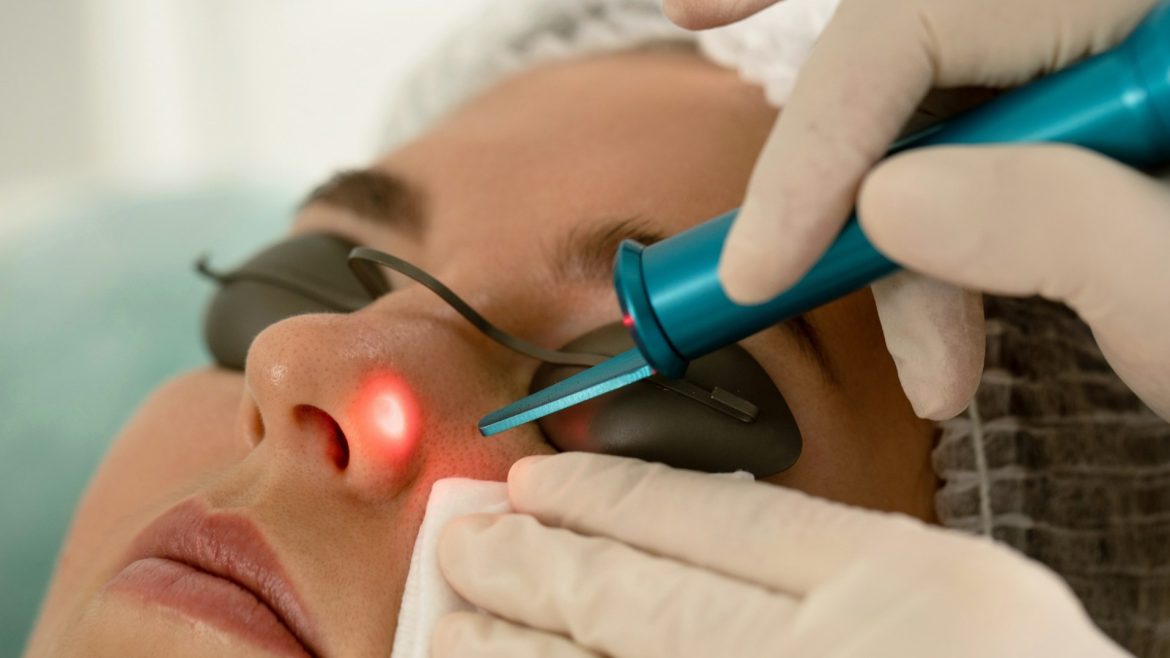
Yes. Vascular lasers have been used for many years to treat visible facial blood vessels.
The laser delivers controlled light that is absorbed by blood within the vessel. This produces heat, causing controlled damage to the vessel while aiming to minimise injury to the surrounding skin. The body then gradually clears the treated vessel.
The important point is that the treatment should be selected for the vessel, rather than simply choosing a particular machine.
At Castleknock Cosmetic Clinic, we have treated facial vascular concerns for many years. Technology continues to develop and we have Nd-YAG and KTP and BBL lasers we can use. However, careful assessment and appropriate treatment remain just as important.
Does Laser Vein Removal Hurt?
Most patients describe treatment as uncomfortable rather than painful. You may feel a quick snap, prick or burst of heat as each vessel is treated. Cooling is often used to make the treatment more comfortable. Treatment itself is usually relatively quick because individual vessels can be targeted precisely.
What Happens After Treatment?
It is normal for the treated area to look temporarily red, swollen or warm. Some vessels can appear darker immediately afterwards. Depending on the treatment and the vessels being treated, there may also be bruising, crusting or small areas of swelling.
The final result is not always immediate. Some vessels fade relatively quickly, while others take several weeks to clear.
How Many Treatments Will I Need?
There is no single number of treatments that applies to everyone. The number required depends on the size and depth of the vessels, their location, your skin type and how your skin responds. Some small vessels may respond well to one treatment. Others, particularly more extensive or complex areas, may require a series. It is usually sensible to allow two to three weeks for the skin to settle and assess the result before deciding whether another treatment is necessary.
What About IPL?
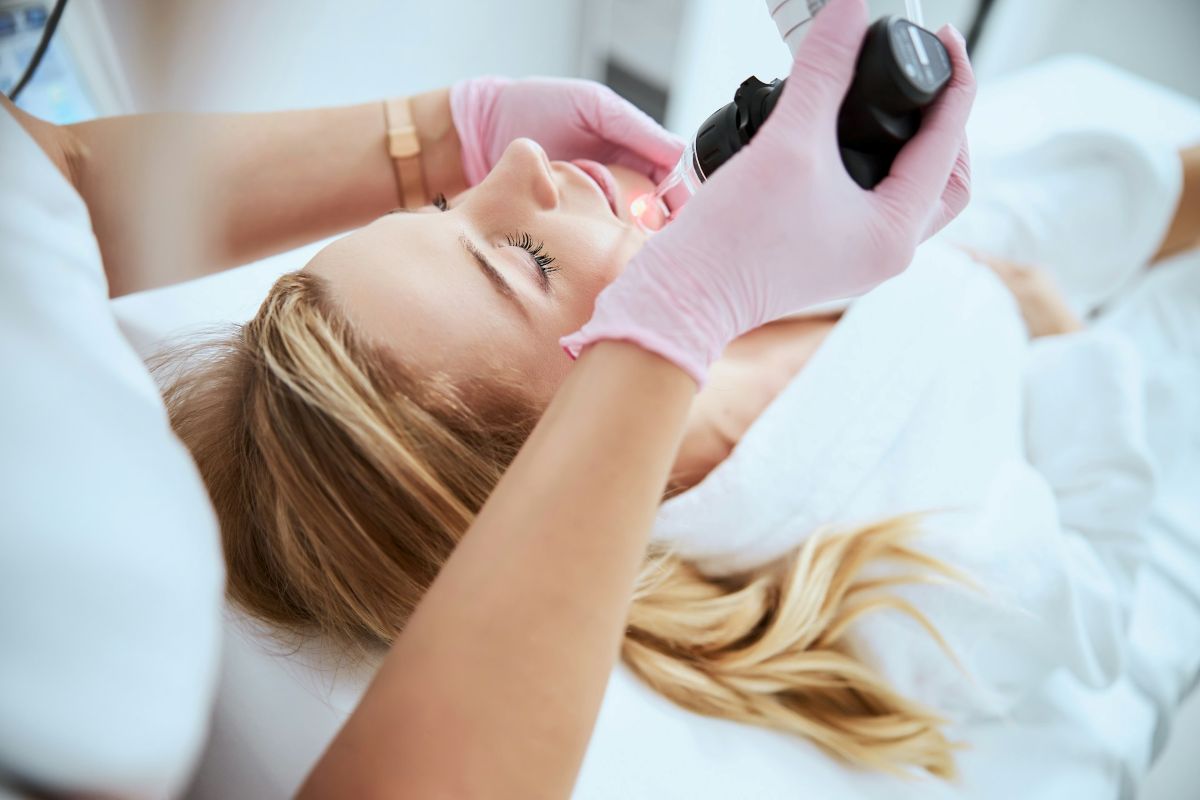
IPL, or intense pulsed light, uses a broader range of wavelengths than a conventional vascular laser. This can make it useful when someone has a combination of visible vessels, general facial redness or pigmentation rather than a few clearly defined vessels. IPL is not simply a weaker form of laser. It is a different technology that can be useful for different patterns of skin changes.
What Is BBL?
BBL, or BroadBand Light, is another form of broadband light technology used to treat vascular changes, redness and other signs of sun-related skin change. We like our Palomar StarLux BBL device. BBL and IPL are related technologies, although the devices and treatment systems are different. BBL delivers the light energy in a way that makes it more selective and associated with less discomfort and side effects. Rather than choosing a treatment because of its brand name, our laser aesthetician, Maggie Walsh believes it is more useful to ask what the treatment is intended to achieve for your particular skin.
Laser vs IPL vs BBL: Which Is Best?
There is no universal “best” treatment. A clearly defined individual facial vessel may be better suited to a Nd-YAG vascular laser. More widespread redness, visible capillaries or a combination of redness and pigmentation may sometimes be better suited to Palomar BBL. In some patients, different treatments may be considered at different stages.
The first step should therefore be identifying what is actually causing the redness or visible vessels.
What If I Have Facial Redness as Well as Thread Veins?
This is very common. Sun damage, rosacea and other skin changes can produce a mixture of visible vessels, diffuse redness and pigmentation. If only the most obvious thread veins are treated, the overall redness of the face may not disappear. During an assessment, it is important to look at the whole area rather than treating one visible vessel in isolation.
Will the Thread Veins Come Back?
A successfully treated individual vessel does not simply grow back in the same way. However, new visible vessels can develop again in the same. For this reason, follow-up treatments are sometimes recommended to keep the skin clear.
Sun exposure, rosacea, ageing and other contributing factors can continue to affect the skin. Treatment can therefore clear the vessels that are present, but it cannot guarantee that new ones will never appear.
Is Facial Vein Removal Permanent?
An individual vessel may be permanently cleared, but this is different from permanently preventing facial thread veins. New vessels can develop over time, particularly when there is an underlying tendency towards facial redness or rosacea. This is why realistic expectations are important.
Is There Any Downtime?
Most facial vascular treatments involve relatively little to no downtime. You may experience redness, warmth, swelling, bruising or darker-looking vessels for a short period afterwards. You will normally be advised to avoid excessive heat, picking or irritating the skin while it settles. Good UV protection is also important.
Can I Wear Makeup Afterwards?
This depends on the treatment and the condition of your skin afterwards. If the skin is intact and there is only mild redness, makeup may be possible after a relatively short period.
If there is crusting or broken skin, you should wait until the area has healed. Your individual aftercare instructions should always take priority.
Is Laser Safe for Facial Thread Veins?
When appropriately selected and performed correctly, vascular laser and light treatments can be safe and effective. However, they are not completely risk-free. Temporary redness and swelling are common. Less common effects can include pigment changes, crusting, blistering and, rarely, scarring. Recent tanning, inappropriate settings or unsuitable treatment can increase the risk. Practitioner experience and correct treatment selection therefore matter.
What About Darker Skin?
Your natural skin type is an important part of treatment planning. Some laser and light treatments carry a greater risk of unwanted pigment changes in darker skin, so the technology, settings and treatment approach need to be selected carefully. Having darker skin does not automatically mean that treatment is impossible, but it does make proper assessment particularly important. A patch test may sometimes be recommended.
Can Facial Veins Around the Eyes Be Treated?
Not every visible vessel around the eyes is suitable for treatment. The skin is delicate and the anatomy of this area requires particular care. The decision depends on the exact location, size and appearance of the vessel, as well as whether the potential benefit outweighs the risk.
Can Creams Remove Thread Veins?
Unfortunately, skincare creams cannot remove an established dilated blood vessel in the way that laser or light treatment can. Good skincare can support the health and appearance of your skin, but it cannot make an established facial thread vein disappear. Having said that, gentle cleansers like Demani Skincare Prepare Soothing Cleanser go a long way in calming down irritated skin.
Does Sun Exposure Matter?
Yes. UV exposure can contribute to facial redness, pigmentation and visible blood vessels. Protecting your skin from the sun is therefore important both before and after treatment and as part of long-term skin care. We recommend Demani Skincare Protect Daily Tinted SPF50 to use during daylight hours.
What Happens at a Consultation?
The most important part of treatment is identifying exactly what you are trying to treat.
During an assessment, I would look at the vessels themselves, their distribution, the surrounding skin and any signs of rosacea or another underlying skin condition. Only then can we discuss whether vascular laser, IPL, BBL or another approach is appropriate.
The Bottom Line
Facial thread veins are common and can usually be treated, but laser, IPL and BBL are not interchangeable treatments. A clearly defined facial vessel may require a different approach from widespread redness or rosacea-related changes. The aim should not simply be to choose the latest technology. It is to understand your skin, identify the cause of the redness and select an appropriate treatment with realistic expectations.
At Castleknock Cosmetic Clinic, an assessment can help determine whether you are dealing with thread veins, broken capillaries, rosacea or another cause of facial redness, and which treatment may be appropriate for you.
Written by Ms Maggie Walsh, Laser Aesthetician and Medically reviewed by Dr Hazem Kahlout, Medical Director, Castleknock Cosmetic Clinic. Dr Kahlout has practised aesthetic medicine since 1998 and is registered with the Medical Council of Ireland.
What do you think? Did you find this blog helpful? Why not join me for meaningful and educational social media posts on Instagram I’d love to hear your comments comments@castleknockcosmetics.ie or tweet me @dr_h_kahlout. If you found this blog helpful I’d appreciate a positive review on Google Review and our Facebook page.